6 Best Shop Vacs for Dust Collection (October 2026)
The best shop vacs for dust collection include the Craftsman CMXEVBE17595 16-Gallon Wet/Dry Shop Vac for mixed workshop cleanup, the DeWalt DXV12P 12-Gallon Wet/Dry Vac for occasional workshop cleanup, and the Craftsman CMXEVBE17596 20-Gallon Wet/Dry Vac for bulky cleanup loads.
On this page (9 sections)
- How we chose shop vacs for dust collection
- The best shop vacs for dust collection
- What matters most in the best shop vac for dust collection?
- Shop vac or dust collector: which should you choose?
- How should you set up a shop vac for tool dust?
- When is a separator worth the extra space?
- How do you keep dust pickup from dropping?
- Which dust collection mistakes should you avoid?
- Which shop vac should you choose for dust collection?
The best shop vac for dust collection here is the Craftsman CMXEVBE17595 for mixed workshop cleanup. Its included dust bag and wide hose make it a practical starting point for collecting dry debris, with filtration matched to the material.
Choose the DeWalt DXV12P for occasional cleanup with smaller loads, or the Craftsman CMXEVBE17596 when bulky waste fills the drum quickly. For direct tool pickup, start with the tool's extraction requirements before choosing any vacuum.
Dust collection involves 2 jobs: catching debris at the tool and cleaning what reaches the floor. A vacuum that handles the second job well still needs the right connection and filtration for the first.
For a broader overview, start with our shop vac buyer's guide. If chips fill your vacuum quickly, see what a shop vac dust separator does.
Our picks at a glance
-
1
 Best for mixed workshop cleanup
Craftsman CMXEVBE17595 16-Gallon Wet/Dry Shop Vac
9.0/10 our score
See it on Amazon -
2
 Best for occasional workshop cleanup
DeWalt DXV12P 12-Gallon Wet/Dry Vac
8.7/10 our score
See it on Amazon -
3
 Best for bulky cleanup loads
Craftsman CMXEVBE17596 20-Gallon Wet/Dry Vac
8.4/10 our score
See it on Amazon
- 4
 Check it
DeWalt DXV16PA 16-Gallon Wet/Dry Shop Vac
Best for shared workshop duties - 5
 Check it
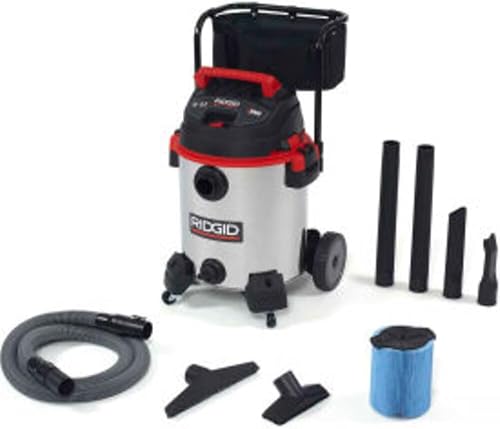
Ridgid 1610RV 16-Gallon Wet/Dry Shop Vac
Best for shops with thresholds - 6
 Check it
Ridgid RT1200 12-Gallon Wet/Dry Vac
Best for crowded work areas
How we chose shop vacs for dust collection
We compared hose design, included collection parts, capacity and mobility for workshop cleanup and possible tool connections. The ranking favors useful collection equipment and practical fit over peak horsepower.
Bag availability matters because emptying loose dust can undo careful cleanup. Hose dimensions matter because a connection must carry the debris without pulling loose, clogging or making the tool awkward to use.
We also considered how each vacuum would move and park in a shop. A larger drum helps with bulky waste, while a cart or smaller body may matter more when the vacuum travels between work areas.
These are wet/dry vacuums with different collection setups, so choose filtration separately for the dust involved. An included cartridge filter or bag does not establish a sealed HEPA system or suitability for hazardous material.
| Product | Best for | Capacity | Hose | Dust collection | Our score |
|---|---|---|---|---|---|
| Craftsman CMXEVBE17595 16-Gallon Wet/Dry Shop Vac | mixed workshop cleanup | 16 gallons | 2-1/2 in x 7 ft | Dust collection bag included | 9.0 |
| DeWalt DXV12P 12-Gallon Wet/Dry Vac | occasional workshop cleanup | 12 gallons | 7 ft | Confirm compatible bag and tool adapter | 8.7 |
| Craftsman CMXEVBE17596 20-Gallon Wet/Dry Vac | bulky cleanup loads | 20 gallons | 2-1/2 in x 7 ft | Dust collection bag included | 8.4 |
| DeWalt DXV16PA 16-Gallon Wet/Dry Shop Vac | shared workshop duties | 16 gallons | 2-1/2 in x 7 ft | Dust bag included | 8.2 |
| Ridgid 1610RV 16-Gallon Wet/Dry Shop Vac | shops with thresholds | 16 gallons | 8 ft | Confirm compatible bag and tool adapter | 8.0 |
| Ridgid RT1200 12-Gallon Wet/Dry Vac | crowded work areas | 12 gallons | 1-7/8 in x 8 ft | Confirm compatible bag and tool adapter | 7.8 |
The best shop vacs for dust collection
The Craftsman CMXEVBE17595 leads for mixed cleanup, while the other picks solve more specific space, load and movement needs. Use the product sections to match your work routine, then check the setup guidance before connecting a tool.
Craftsman CMXEVBE17595 16-Gallon Wet/Dry Shop Vac: Best for mixed workshop cleanup
- 16-gallon drum
- 2-1/2 in x 7 ft Dual-Flex hose
- Dust collection bag included
- Qwik Lock filter
A wide hose and included dust bag suit a workshop that produces both chips and dry debris. The nozzle kit also covers floor, vehicle and wet cleanup.
Pros
- Dust collection bag included
- Dual-Flex hose resists kinking
- Replacement filter and bag options
Cons
- Needs substantial storage space
- Included bag does not establish fine-dust filtration
Choose the Craftsman CMXEVBE17595 if one vacuum will handle bench debris, floor cleanup and occasional tool connections. Its 16-gallon drum and included dust bag offer a useful middle ground between smaller loads and the largest option here.
The 2-1/2 in x 7 ft hose suits bulkier debris, and Craftsman says the Dual-Flex ends resist kinking through 180-degree movement. A utility nozzle, car nozzle, wet nozzle and 2 extension wands cover several cleanup jobs.
The Qwik Lock system makes filter changes straightforward, and Craftsman offers compatible replacement filters and bags. Pick those parts for your material rather than assuming every compatible filter serves the same purpose.
Skip it if your main work is brief cleanup in a tight room or frequent carrying between floors. Its 26 lb weight and 21.03 x 23.8 x 26.7 in body deserve a planned parking spot, especially with adapters attached.
DeWalt DXV12P 12-Gallon Wet/Dry Vac: Best for occasional workshop cleanup
- 12-gallon drum
- 7 ft hose
- Cartridge filter
- 20 ft cord
Choose this smaller-capacity option when your workshop produces modest cleanup loads. Its cord gives you room to position the vacuum near the work.
Pros
- Less drum volume than the larger picks
- 20 ft cord
- 23.2 lb weight
Cons
- Confirm compatible dust bag before planning bagged collection
- Tool adapter fit needs checking
Choose the DeWalt DXV12P for occasional woodworking cleanup when you don't generate enough waste to justify a larger drum. Its 12-gallon capacity suits that pattern, and the 20 ft cord helps you position it near the job.
The 7 ft hose provides working reach without building a long hose run across the shop. At 23.2 lb, it is lighter than the larger DeWalt below, though collected debris adds to any lifting load.
It uses a cartridge filter, but plan a suitable bag separately if you want bagged dry collection. Resolve that detail before buying accessories so the vacuum, filter and bag form a compatible setup.
Skip this model if an included dust bag is central to your choice or bulky debris is your main problem. Its strongest fit is modest cleanup around a nearby outlet, with tool connections added only after checking port fit and extraction needs.
Craftsman CMXEVBE17596 20-Gallon Wet/Dry Vac: Best for bulky cleanup loads
- 20-gallon drum
- 2-1/2 in x 7 ft Dual-Flex hose
- Dust collection bag included
- Qwik Lock filter
The largest drum here suits bulky debris and repeated cleanup around a fixed work area. An included dust bag, crevice tool and diffuser round out the kit.
Pros
- Largest drum in this group
- Dust collection bag included
- Crevice tool and diffuser included
Cons
- More capacity than occasional cleanup needs
- Needs clearance for its 30.04 in height
Choose the Craftsman CMXEVBE17596 when bulky debris fills smaller containers before the cleanup is done. Its 20-gallon drum is the largest here, making it a sensible choice for a shop with room for a dedicated cleanup station.
The kit includes a dust collection bag, Qwik Lock filter and 2-1/2 in x 7 ft Dual-Flex hose. A crevice tool and diffuser join the utility, car and wet nozzles, plus 2 extension wands.
Extra drum volume helps most with loose chips and larger debris. Fine dust may restrict the filter before it fills the tank, so buying more capacity is not a substitute for maintaining airflow.
Skip it for light sanding cleanup or a work area where the vacuum must fit under a low shelf. Its 30.04 in height needs clearance, and the drum's full volume is not the amount of material it can collect during use.
DeWalt DXV16PA 16-Gallon Wet/Dry Shop Vac: Best for shared workshop duties
- 16-gallon drum
- 116 CFM airflow
- Cartridge filter and dust bag included
- 20 ft power cord
An included dust bag, floor and utility nozzles, and a long cord suit a vacuum shared between the bench and general cleanup. DeWalt specifies airflow for comparison with tool requirements.
Pros
- 116 CFM airflow specified
- Dust bag included
- 20 ft power cord
Cons
- 30.6 lb weight matters when lifting
- Tool extraction requirements still need matching
Choose the DeWalt DXV16PA when the same vacuum will serve a bench, floor and vehicle cleanup routine. Its included dust bag and varied nozzle kit support that shared role, with a 20 ft cord for positioning around the work area.
DeWalt specifies 116 CFM, which gives you an airflow figure to compare with a tool's requirements. Account for the hose, filter and adapters when planning extraction, since airflow at the tool changes with the connected system.
The vacuum has a 16-gallon drum and a 2-1/2 in x 7 ft hose. DeWalt includes a muffler, but choose hearing protection for the full work area, including any running power tool.
Skip it if you often lift the vacuum onto shelves or into a vehicle. Its 30.6 lb weight matters before debris is added, and a long cord is most useful when the vacuum can stay on the floor.
Ridgid 1610RV 16-Gallon Wet/Dry Shop Vac: Best for shops with thresholds
- 16-gallon stainless steel drum
- 8 ft hose
- Cartridge filter
- Cart, push handle and large rear wheels
The cart, push handle and large rear wheels suit a cleanup route that crosses thresholds or rough surfaces. Allow room to park and turn the whole cart.
Pros
- Cart and large rear wheels
- Push handle
- 8 ft hose
Cons
- Cart needs turning and storage space
- Confirm compatible filter and bag for your dust
Choose the Ridgid 1610RV when moving between work areas is a larger problem than hose reach. Its cart, push handle and large rear wheels are the main reasons to select it over a simpler canister.
Ridgid says those features help it travel over rough surfaces, thresholds and stairs. Check the actual route and load before moving it, since wheels do not remove the need to control a heavy container on a step.
The vacuum pairs a 16-gallon stainless steel drum with an 8 ft hose and cartridge filter. A crevice tool and nozzle are included, while a dust collection setup needs suitable filtration and any required bag.
Skip it if the vacuum will stay parked beside one bench or fit inside a narrow storage bay. The cart needs room to turn, and its mobility features offer less value when the main job is stationary tool pickup.
Ridgid RT1200 12-Gallon Wet/Dry Vac: Best for crowded work areas
- 12-gallon drum
- 1-7/8 in x 8 ft locking hose
- Qwik Lock filter system
- Accessory storage caddy
A narrower locking hose and swivel casters suit cleanup around benches and obstacles. Its accessory caddy keeps the included nozzles together.
Pros
- Locking hose stays connected
- Filter changes without tools
- 360-degree caster wheels
Cons
- Narrower hose is less suited to bulky debris
- Confirm compatible dust bag for bagged collection
Choose the Ridgid RT1200 for cleanup around bench legs, stored materials and other obstacles. Its 1-7/8 in x 8 ft locking hose is narrower than the wide-hose picks, while the locking connection helps prevent an accidental pullout.
Ridgid describes the hose's smooth interior as helping reduce clogs. Still, avoid feeding it long shavings or chunks that can bridge across the narrower opening.
The 12-gallon drum sits on 360-degree casters, and an accessory caddy keeps attachments together. Its Qwik Lock filter system allows removal without tools, which helps when switching between approved collection setups.
Skip it if most of your waste is bulky debris or your tool requires a wider extraction path. It suits a crowded work area, but the caster layout still needs a clear route, and fine-dust work needs a suitable filter and bag combination.
What matters most in the best shop vac for dust collection?
Choose by material, tool requirements and hose fit, then decide how much drum capacity you need. This order keeps you from buying a large vacuum that is awkward to connect or unsuitable for the dust.
Match the shop vac dust collection setup to the material
Start by identifying what you will collect: chips, ordinary dry debris, fine sanding dust or material with specific handling rules. Those jobs can require different filters, bags and equipment.
Fine dust can remain airborne after visible chips disappear. Do not assume a standard cartridge filter or an ordinary collection bag provides the filtration your task requires.
For lead, asbestos, silica-bearing material or other hazardous dust, use the equipment and procedures required for that task. None of these recommendations establishes suitability for those materials.
Match the hose and adapter before buying
Measure the inside and outside dimensions of the tool port and hose connector. Hose diameter describes the hose, but it does not guarantee that 2 connector ends will join.
Check whether the tool uses a friction fit, locking fitting or a shaped adapter. A connection should stay secure through normal tool movement without putting strain on the dust port.
Keep the route as short and direct as practical. Extra length, tight bends and several reducers create more resistance, while a heavy hose hanging from a small sander can interfere with control.
For occasional tool changes, a fitted adapter can simplify the job. Our guide to useful shop vac accessories helps you choose connection parts without collecting attachments you won't use.
Read airflow and suction as different measures
CFM describes airflow, while suction pressure describes the vacuum's ability to pull against resistance. Both matter, but neither figure replaces matching the equipment to the tool.
Airflow helps carry dust through a hose. Filters, bends, narrow adapters and packed debris can restrict that flow even when the motor continues to run normally.
Read what CFM means on a shop vac for a fuller explanation. Compare figures only when their measurement conditions are known to be comparable.
Peak HP is not continuous operating horsepower. Use it as secondary information rather than a shortcut for choosing between vacuums with different hoses and collection equipment.
Size the drum for waste volume and emptying
Choose enough capacity for your normal cleanup, not the biggest container you can store. Loose chips take up space quickly, while fine dust can affect filter performance before the tank looks full.
A large drum is useful when you routinely collect bulky waste. It becomes a burden when you need to lift it, tip it carefully or move through narrow doors.
A separator changes this decision because much of the debris goes into a separate container. In that setup, floor space and convenient emptying can matter more than the vacuum's drum size.
Shop vac or dust collector: which should you choose?
Choose a shop vac for suitable small-port tools and general cleanup, and a dust collector for machines whose extraction instructions call for higher airflow through larger ports. An adapter changes the connection, not the system's airflow capacity.
Small-port sanders and other portable tools may suit vacuum extraction when their instructions allow it. Larger woodworking machines can need a much larger volume of moving air to carry chips away from the cutting area.
Also check whether the tool has more than one dust outlet. Connecting only one port can leave part of the dust path uncovered, even when the hose fits perfectly.
Read our shop vac vs dust collector comparison if you're choosing a system for a machine. For general sizing, our guide to shop vac capacity, peak HP and CFM explains which measurements answer which questions.
How should you set up a shop vac for tool dust?
Set up secure connections, suitable filtration and a clear hose route before starting the tool. A few minutes spent on the whole path can prevent clogs, loose fittings and awkward tool movement.
Prepare the filter, bag and container
Unplug the vacuum before opening it or changing collection parts. Make sure the drum is empty enough for the job and dry before setting up for dry dust.
Seat the filter as directed and inspect it for damage. Fit the compatible bag securely around the inlet, leaving it arranged as the instructions require rather than crushed against the incoming debris path.
Check the lid seal and latches before closing the unit. A poorly seated lid or damaged seal can reduce pickup and allow dust to escape.
Route the hose around the work
Park the vacuum where it won't block your stance, the workpiece or an exit. Leave enough hose movement for the tool's full travel without creating a loop that catches your feet.
Support the hose if its weight pulls on a portable tool. Keep it clear of blades, bits and moving stock, and do not cover the tool's ventilation openings.
Turn the vacuum on before cutting or sanding. After stopping the tool, let the vacuum clear the hose briefly before switching it off.
Plan power for both machines
Check the electrical requirements of the vacuum and power tool together. A circuit that supports either machine alone may not support both running at once.
Follow both manuals for extension cord size and length. If you want automatic tool switching, confirm the controller's electrical limits rather than assuming it can carry both loads.
Our guide on how to use a shop vac covers the basic operating sequence and attachment choices.
When is a separator worth the extra space?
Add a separator when chips fill bags or the drum too quickly. It catches material before the vacuum, which can reduce the debris reaching the filter and make bulk waste easier to empty.
The trade-off is another container, more joints and added resistance in the air path. Keep those connections secure and avoid building a long, winding route just to fit the separator into a distant corner.
Plan how you will empty its container before choosing a position. A bin wedged under a bench loses much of its convenience if you must dismantle the setup each time.
A separator does not replace the vacuum filter, and very fine particles can continue downstream. Keep the required filter and bag arrangement in place.
How do you keep dust pickup from dropping?
Check clogs, bag fill, filter condition and seals when pickup weakens. Work through the air path before assuming the vacuum needs replacing.
A sudden drop often calls for checking the nozzle, adapter and hose for a blockage. A gradual decline can point to a filling bag or loaded filter, even when the drum has room left.
Switch off and unplug the vacuum before clearing obstructions. Inspect the hose bends and reducer fittings, where long shavings and chunks can catch.
Clean filters only by methods allowed for that filter. Some cartridges can be washed, while others cannot, so do not use water unless the instructions allow it.
Avoid blasting dust off a filter inside the shop. Use an approved cleaning method that contains the dust, and replace damaged filters rather than working around a tear.
Remove bags before they become difficult to handle, then close and dispose of them according to the material's requirements. Overfilling makes removal messier and can restrict the collection path.
For wet pickup, change the collection setup according to the vacuum's instructions. See whether a shop vac can vacuum water before switching from dry dust to liquids, then dry the drum before returning to dry work.
Which dust collection mistakes should you avoid?
Avoid restricting airflow or spreading collected dust back into the room. These mistakes can undermine a suitable vacuum without any change in motor power.
- Buying only by drum size. More storage volume does not improve dust capture at a poorly connected tool.
- Stacking reducers. Use the fewest suitable fittings and avoid shrinking the air path more than the tool requires.
- Waiting for a full tank. A filter or bag can restrict flow long before the drum fills.
- Pulling the vacuum by the hose. Move it with the handle so the connector and tool port do not carry the load.
- Using the blower on settled workshop dust. Blowing moves dust back into the air instead of containing it.
- Ignoring dust outside the tool port. Pickup depends partly on the tool's shroud and collection design; a larger vacuum cannot correct every escape path.
- Mixing incompatible waste. Follow material restrictions, and never collect hot embers, sparks or flammable liquids.
Wear the protection required for the work even when extraction is running. Visible cleanliness alone does not establish that airborne dust is controlled.
Which shop vac should you choose for dust collection?
Choose the Craftsman CMXEVBE17595 for mixed cleanup, the DeWalt DXV12P for modest occasional loads, or the Craftsman CMXEVBE17596 for bulky waste. Those choices separate everyday use, smaller jobs and maximum drum volume.
Pick the DeWalt DXV16PA for shared bench and floor duties, the Ridgid 1610RV for routes across thresholds, or the Ridgid RT1200 for working around obstacles with a narrower locking hose.
Before ordering the best shop vac for dust collection for your shop, write down your main tool, dust type, port dimensions and available parking space. That short list should determine the filter, bag and adapter you buy with it.
If your main problem is rapid chip buildup, use our shop vac dust separator guide to plan the extra container before choosing a larger vacuum.
Our top 3 picks at a glance
-
1
Best for mixed workshop cleanup
Craftsman CMXEVBE17595 16-Gallon Wet/Dry Shop Vac
9.0/10 our score
See it on Amazon -
2
Best for occasional workshop cleanup
DeWalt DXV12P 12-Gallon Wet/Dry Vac
8.7/10 our score
See it on Amazon -
3
Best for bulky cleanup loads
Craftsman CMXEVBE17596 20-Gallon Wet/Dry Vac
8.4/10 our score
See it on Amazon
Frequently asked questions
Can a shop vac collect dust from power tools?
Yes, a shop vac can collect dust from tools whose extraction requirements it meets; match the hose connection, airflow needs and filtration to the tool and material. Small dust ports may need an adapter, while machines with large extraction ports may need a higher-airflow dust collector.
Is a dust collection bag enough for fine dust?
No, a collection bag alone does not make a vacuum suitable for fine dust; use the filter and bag combination required for the material and vacuum. Check any required filtration class or certification, keep seals properly seated, and contain the dust while removing and disposing of the bag.
What hose size works for dust collection?
Use the hose size allowed by your tool's extraction instructions, with connectors that fit securely at both ends. Wider hoses suit bulkier debris, while smaller hoses can be easier to guide around a bench; avoid unnecessary reducers, extra hose length and sharp bends that restrict airflow.
Should I use a dust separator with a shop vac?
Use a separator when chips or loose debris fill your vacuum quickly; it catches material upstream and adds another container to empty, but also needs floor space and extra connections. It does not replace the filter; our shop vac dust separator guide explains how to plan the setup.
Is a shop vac the same as a dust collector?
No, shop vacs and dust collectors serve different extraction needs; shop vacs commonly suit smaller ports and general cleanup, while dust collectors move larger volumes of air for machines with larger ports. Choose from the tool's extraction requirements rather than assuming an adapter makes either system suitable.


