8 Best Shop Vacs (October 2026)
The best best shop vacs include the Craftsman CMXEVBE17595 16-Gallon Wet/Dry Shop Vac for large garage cleanups, the DeWalt DXV06P 6-Gallon Wet/Dry Vac for quick household jobs, and the DeWalt DXV12P 12-Gallon Wet/Dry Vac for recurring workshop cleanup.
On this page (8 sections)
- How we chose the best shop vacs
- Compare the best shop vacs
- The best shop vacs for garage and workshop jobs
- What shop vac size should you choose?
- Which shop vac features matter beyond tank size?
- How should you set up a shop vac for dry or wet pickup?
- How do you keep a shop vac working well?
- Which shop vac is the best choice for your work?
The Craftsman CMXEVBE17595 is the best shop vac for large garage and workshop cleanups, with a roomy drum, oversized drain and useful nozzle set. Choose the DeWalt DXV06P for smaller everyday jobs, or the Vacmaster VFB511H when compact storage and bagged dry cleanup matter most.
Buy for the mess you handle regularly, rather than the biggest emergency you can imagine. A vacuum that's easy to store, set up and empty will fit your routine better than an oversized model you struggle to move.
If capacity is your first question, start with our shop vac size guide. For an overview of vacuum types and uses, read the complete shop vac buyer's guide.
Our picks at a glance
-
1
 Best for large garage cleanups
Craftsman CMXEVBE17595 16-Gallon Wet/Dry Shop Vac
9.0/10 our score
See it on Amazon -
2

-
3
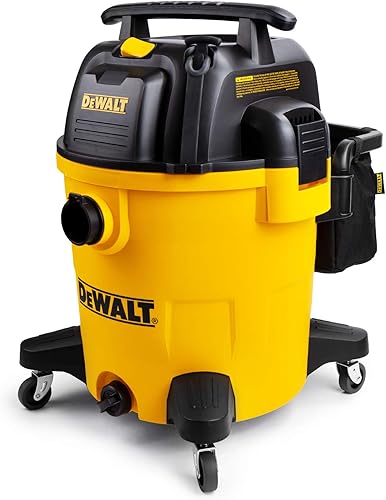 Best for recurring workshop cleanup
DeWalt DXV12P 12-Gallon Wet/Dry Vac
8.7/10 our score
See it on Amazon
- 4
 Check it
Vacmaster VFB511H 5-Gallon Wet/Dry Vac
Best for compact work areas - 5
 Check it
Craftsman CMXEVBE17596 20-Gallon Wet/Dry Vac
Best for bulky cleanup loads - 6
 Check it
DeWalt DXV16PA 16-Gallon Wet/Dry Shop Vac
Best for wide work areas - 7
 Check it
Ridgid RT1200 12-Gallon Wet/Dry Vac
Best for moving between tasks - 8
 Check it
Vacmaster VJE1412SW 14-Gallon Wet/Dry Vac
Best for frequent bagged cleanup
How we chose the best shop vacs
We favored useful cleanup features and clear buyer fit: suitable tank volume, manageable handling, reach, filtration and attachments. Scores reflect those factors, with larger garage and workshop jobs carrying the most weight in this roundup.
A lower-ranked model can still be the better purchase for your space. A compact vac suits quick cleanup beside a bench, while a drain-equipped larger model makes more sense for recurring floor debris and occasional liquid pickup.
Compare the best shop vacs
Choose the tank and hose that fit your regular work, then compare cord reach and emptying features. The table makes the main differences easier to scan before you read each recommendation.
| Product | Best for | Capacity | Hose | Power | Our score |
|---|---|---|---|---|---|
| Craftsman CMXEVBE17595 16-Gallon Wet/Dry Shop Vac | large garage cleanups | 16 gallons | 2-1/2 in x 7 ft | Corded, 6.5 peak HP | 9.0 |
| DeWalt DXV06P 6-Gallon Wet/Dry Vac | quick household jobs | 6 gallons | 1-7/8 in x 7 ft | Corded, 4 HP | 8.8 |
| DeWalt DXV12P 12-Gallon Wet/Dry Vac | recurring workshop cleanup | 12 gallons | 7 ft | Corded, 5.5 peak HP | 8.7 |
| Vacmaster VFB511H 5-Gallon Wet/Dry Vac | compact work areas | 5 gallons | 7 ft | 8.5 | |
| Craftsman CMXEVBE17596 20-Gallon Wet/Dry Vac | bulky cleanup loads | 20 gallons | 2-1/2 in x 7 ft | Corded, 6.5 peak HP | 8.4 |
| DeWalt DXV16PA 16-Gallon Wet/Dry Shop Vac | wide work areas | 16 gallons | 2-1/2 in x 7 ft | Corded, 6.5 peak HP | 8.2 |
| Ridgid RT1200 12-Gallon Wet/Dry Vac | moving between tasks | 12 gallons | 1-7/8 in x 8 ft locking hose | 7.8 | |
| Vacmaster VJE1412SW 14-Gallon Wet/Dry Vac | frequent bagged cleanup | 14 gallons | Corded, 6.5 peak HP | 7.6 |
The best shop vacs for garage and workshop jobs
The Craftsman leads for varied large cleanups, while the compact DeWalt and Vacmaster suit smaller spaces. Each recommendation below explains the work it fits and the reason to choose another model.
Craftsman CMXEVBE17595 16-Gallon Wet/Dry Shop Vac: Best for large garage cleanups
- 16-gallon tank
- 6.5 peak HP
- Oversized drain
- Built-in blower port
- Dual-Flex hose ends
A roomy tank, oversized drain and car, utility and wet nozzles suit varied garage cleanup. Choose it when the vacuum can stay near your work area.
Pros
- Oversized drain for liquid emptying
- Car, utility and wet nozzles included
- Craftsman provides a 3-year limited warranty
Cons
- Bulky for small storage spaces
- 26 lb empty weight adds to carrying effort
The Craftsman CMXEVBE17595 suits a garage where floor debris, vehicle cleanup and occasional spills all fall to one vacuum. Its 16-gallon drum and wide hose make it a sensible choice when bulky dry debris is a regular part of cleanup.
The 2-1/2 in x 7 ft hose has Dual-Flex ends with 180-degree movement to resist kinking. Utility, car and wet nozzles cover distinct jobs, while extension wands let you work on the floor without staying bent over.
Its oversized drain is the main convenience for liquid collection because you can empty water without tipping the entire drum. The rear blower port also handles leaves and grass clippings, provided you have a suitable place to direct them.
Choose it if the vacuum can live near the work and roll to most jobs. Skip it for frequent stair carrying or cramped storage: it weighs 26 lb empty, and collected debris adds to that load.
DeWalt DXV06P 6-Gallon Wet/Dry Vac: Best for quick household jobs
- 6-gallon tank
- 4 HP motor
- 10 ft power cord
- Built-in blower port
- Rubberized swivel casters
This smaller DeWalt suits short cleanup sessions and limited storage. Its floor, utility and crevice nozzles cover several everyday tasks.
Pros
- 14.8 lb empty weight
- Rubberized swivel casters
- Cartridge filter and dust bag included
Cons
- Small tank fills sooner on bulky debris
- Shorter cord than the larger DeWalt picks
The DeWalt DXV06P is the better match for short jobs you want to finish and put away quickly. Its 6-gallon tank and 14.8 lb empty weight suit car footwells, a small workbench area and scattered garage debris.
Rubberized swivel casters help it turn around obstacles, and the floor, utility and crevice nozzles cover open surfaces and narrow gaps. A cartridge filter and dust bag are included, so you can prepare for suitable dry debris without starting with a bare tank.
The main limit is placement: its 10 ft cord gives less freedom than the longer cords on the larger DeWalt models. Plan where you'll plug in before choosing where the vacuum will sit.
Choose this model when carrying and storage matter more than collecting a large load at once. Skip it for recurring high-volume cleanup, and follow DeWalt's instruction to install the filter before switching on.
DeWalt DXV12P 12-Gallon Wet/Dry Vac: Best for recurring workshop cleanup
- 12-gallon tank
- 5.5 peak HP
- 7 ft hose
- 20 ft power cord
A middle-size tank and longer power cord suit routine shop cleanup. Choose it when compact models require too many emptying stops.
Pros
- Middle-size tank capacity
- 20 ft power cord
- DeWalt provides a 3-year limited warranty
Cons
- 23.2 lb empty weight
- Needs more storage room than the compact picks
The DeWalt DXV12P suits a workshop where cleanup regularly outgrows a compact drum. Its 12-gallon tank and 20 ft cord provide a middle option between small spot-cleaning vacs and the largest canisters here.
That longer cord helps when the outlet is near a wall but the work spreads across the room. Keep the vacuum parked where the hose can reach your task without stretching either connection tight.
At 23.2 lb empty, it needs a more deliberate storage and carrying plan than the compact picks. Measure the intended parking space, including room for the hose, rather than judging its footprint from tank volume alone.
Choose it for recurring floor cleanup when cord reach matters more than a very large drum. Skip it if you mainly clean small areas upstairs, and use our shop vac accessories guide to work out which attachments your routine needs.
Vacmaster VFB511H 5-Gallon Wet/Dry Vac: Best for compact work areas
- 5-gallon tank
- High-efficiency cartridge filter and dust bag
- 25 ft combined cleaning reach
- Nine accessories
This compact Vacmaster suits workbench debris and vehicle interiors. Included bags, tools and onboard storage help keep a small cleanup station organized.
Pros
- Compact tank and 15.4 lb empty weight
- Dust bag and cartridge filter included
- Car, utility and crevice tools included
Cons
- Small tank needs frequent emptying on large jobs
- Fine-particle filter claim does not establish hazardous-dust suitability
The Vacmaster VFB511H suits a compact cleanup station near a bench or vehicle. Its 5-gallon tank keeps the body small, while included car, utility and crevice tools cover several common detail jobs.
Vacmaster says the high-efficiency cartridge filter and dust bag capture fine particles down to 1 micron. That makes filtration a reason to consider this package for suitable dry debris, but it does not establish approval for hazardous materials.
Its 25 ft cleaning reach combines the power cord and hose; it is not the distance the nozzle reaches from the tank. Onboard hose, cord and accessory storage helps keep the kit ready between short cleanup sessions.
Choose it when you want a compact vacuum with a bag and useful tools included. Skip it for bulky renovation debris or large liquid loads, where the small drum would interrupt work with frequent emptying.
Craftsman CMXEVBE17596 20-Gallon Wet/Dry Vac: Best for bulky cleanup loads
- 20-gallon tank
- 6.5 peak HP
- Oversized drain
- Built-in blower port
- Dual-Flex hose
The largest drum here suits recurring high-volume cleanup. Its oversized drain and broad nozzle set also support wet pickup.
Pros
- Largest tank in this group
- Crevice tool and diffuser included
- Craftsman provides a 3-year limited warranty
Cons
- Substantial storage footprint
- Large wet loads are better drained than carried
The Craftsman CMXEVBE17596 is the pick for people who regularly collect a large volume of debris in one work area. Its 20-gallon drum gives bulky material more room before an emptying stop.
The wider hose suits those larger cleanup loads, and the accessory set includes utility, car and wet nozzles plus a crevice tool and diffuser. The oversized drain is useful when collected liquid would make lifting and tipping the drum awkward.
Choose this model because you need capacity, rather than expecting the larger drum to increase suction. Its peak horsepower figure matches the smaller Craftsman in this roundup, and extra tank space serves a different purpose from airflow.
Skip it when most jobs fit in a small bucket-sized load or when the storage space is tight. Before buying, allow clearance above its 30.04 in height so you can remove the power head and reach the filter.
DeWalt DXV16PA 16-Gallon Wet/Dry Shop Vac: Best for wide work areas
- 16-gallon tank
- 6.5 peak HP
- 20 ft power cord
- Integrated silencing muffler
- Drain hose adapter
The longer cord suits a vacuum parked beside a broad work area. A drain adapter and integrated muffler add reasons to choose it for recurring cleanup.
Pros
- Long power cord
- Integrated silencing muffler
- Hose adapter connects to the drain port
Cons
- 30.6 lb empty weight
- Large tank needs dedicated storage space
The DeWalt DXV16PA suits a broad garage or workshop where the vacuum often stays parked while you move around it. Its 20 ft power cord and 16-gallon tank support that approach without choosing the largest drum here.
DeWalt specifies 116 CFM of airflow, a useful figure for understanding air movement through a vacuum. The kit also includes a wide hose and floor, utility and crevice nozzles for different surfaces and gaps.
A hose adapter connects to the drain port, giving you a way to direct liquid out of the tank. DeWalt says the integrated silencing muffler reduces operating noise, though that feature alone is no reason to ignore hearing protection needs.
Choose it when the cord reach and drain adapter solve clear problems in your workspace. Skip it for frequent lifting: at 30.6 lb empty, this is a substantial canister before you collect anything.
Ridgid RT1200 12-Gallon Wet/Dry Vac: Best for moving between tasks
- 12-gallon tank
- 5.0 peak HP
- Locking hose
- 360-degree casters
- Large drain
A locking hose, swivel casters and accessory caddy suit cleanup around several workstations. The large drain supports occasional liquid collection.
Pros
- Locking hose connection
- Tool-free filter removal
- Includes utility, wet and car nozzles
Cons
- Narrower hose than the large Craftsman models
- Less drum volume than the largest picks
The Ridgid RT1200 suits cleanup that moves between several workstations on the same floor. Its locking hose and 360-degree casters address the connection and movement parts of that routine.
The 1-7/8 in x 8 ft hose provides extra hose length compared with most picks here. Ridgid says its smooth interior helps reduce clogging, while the locking connection is designed to keep the hose attached during use.
A large drain, accessory caddy and tool-free Qwik Lock filter system support regular emptying and setup changes. Utility, wet and car nozzles are included, so the package covers more than open-floor pickup.
Choose it when hose handling matters more than maximum drum size. Skip it if wide-hose pickup of bulky debris is your priority, and roll the canister by its body rather than treating the locking hose as a towing handle.
Vacmaster VJE1412SW 14-Gallon Wet/Dry Vac: Best for frequent bagged cleanup
- 14-gallon stainless steel tank
- 6.5 peak HP
- 18 accessories including five dust bags
- 20 ft power cord
- 27 ft combined cleaning reach
A roomy stainless steel tank and five included dust bags suit repeated dry cleanup. Onboard storage keeps the hose, cord and accessories together.
Pros
- Five dust collection bags included
- Onboard hose, cord and accessory storage
- Flat power head provides a tool-resting surface
Cons
- 28.4 lb empty weight
- Accessory total includes five bags rather than 18 separate tools
The Vacmaster VJE1412SW suits repeated dry cleanup where you want bags ready for the next job. Its 14-gallon stainless steel tank offers room for larger loads, and the package includes 5 dust collection bags.
Those bags count toward the 18-accessory total, so assess the contents by what you'll use rather than the headline count. Onboard storage keeps the cord, hose and accessories together, while the flat power head offers a place to set tools.
Vacmaster says its high-efficiency cartridge filter captures fine particles down to 1 micron. Choose the filter and bag arrangement for the material you're collecting, and keep the ventilation path clear when resting anything on top.
Choose it for a roomy, organized bagged-cleanup setup. Skip it for frequent carrying or a small closet: its 28.4 lb empty weight and full-size body call for a dedicated parking spot.
What shop vac size should you choose?
Choose the smallest tank that handles your regular cleanup without constant emptying. Extra capacity helps with bulky loads, but it also takes space while the vacuum sits unused.
The best shop vac size for your routine
A 5- or 6-gallon model fits short bench, car and household cleanup sessions. It also makes sense when you carry the vacuum between rooms or have only a small storage area.
Move toward 12 to 16 gallons when you regularly clear a shop floor or collect debris from several tasks before emptying. Choose 20 gallons when high-volume loads are common enough to justify the larger body.
Tank size is not usable collection capacity. Filters, bags, debris shape and liquid shutoff limits affect how much you can collect, so never plan on filling the stated drum volume with water.
For a closer capacity breakdown, read what size shop vac do I need?. Include the emptying route in your decision: a convenient drain location can matter more than a few extra gallons.
Measure the storage and carrying route
Measure the parking space with room for the hose, attachments and lid removal. A vacuum wedged under a shelf may fit while closed but still be awkward to service.
Think through doorways, stairs and the path to your disposal point. Choose for the loaded vacuum, since water and dense debris make a manageable empty canister much harder to lift.
Which shop vac features matter beyond tank size?
Prioritize hose fit, filtration and working reach before comparing motor labels. Those details determine whether the vacuum suits your debris and reaches the places you need to clean.
Match the hose to the debris
A wider hose is useful for bulky chips and loose workshop debris because larger pieces have more room to pass. A narrower hose and crevice tool can be easier to position around seats, corners and bench equipment.
Check accessory connections before adding a tool or adapter. Hose diameter, locking fittings and the shape of a tool's dust port all affect compatibility.
Avoid adding hose length without a reason. Extra length and tight bends increase resistance, so keep the route as short and direct as the task allows.
Read airflow and suction as different measures
Airflow describes how much air moves, while sealed suction describes pressure under restricted flow. Neither number on its own describes every cleanup task, and comparisons work best when measurement methods match.
Peak horsepower should not be your deciding number. For help reading airflow figures, see our explanation of what CFM means on a shop vac.
Treat filters and bags as part of the purchase
Check the correct replacement filter and bag types before buying. A dry collection bag can simplify disposal and help keep suitable debris away from the main filter, but it does not replace that filter.
Fine-particle capture claims do not establish whole-vacuum containment or approval for hazardous dust. For hazardous materials, use equipment specifically approved for the material and job.
Separate cord reach from hose reach
The cord determines where the canister can sit; the hose determines where the nozzle can reach from that position. Combined cleaning-reach figures add those lengths and should not be read as hose length.
For vehicle interiors, park the vacuum where you can work without dragging the hose across painted surfaces. Our guide to using a shop vac for car detailing covers attachment choices and interior care.
How should you set up a shop vac for dry or wet pickup?
Prepare the filter, bag and tank for the material before switching on. Wet and dry jobs require different arrangements, so follow the model's manual instead of leaving the same setup in place for every task.
Prepare for dry debris
Unplug the vacuum, open the tank and make sure the interior is dry. Fit the correct dry filter securely, then install a compatible bag if the task and manual call for one.
Latch the head, attach the hose to the suction inlet and check the nozzle path for blockages. Start with the tool suited to the surface: a narrow crevice tool is useful in gaps but slow across an open floor.
Clear large scraps by hand before vacuuming. Don't collect hot ash, burning material, flammable liquids or other materials prohibited by the manual.
Prepare for water
Remove dry debris and the dry dust bag, then arrange the filter exactly as the manual requires for liquid pickup. Keep the plug and electrical connections dry, and place the canister where it will remain upright.
Stop when the liquid shutoff activates or the manual's collection limit is reached. Switch off before draining, and empty early if moving the tank would otherwise require lifting a heavy load.
For the full sequence, use our guide to how to use a shop vac. Allow the tank and suitable components to dry before returning to dry collection.
How do you keep a shop vac working well?
Empty it promptly and keep the air path clear. A packed bag, clogged filter or blocked hose can reduce pickup even when the motor still runs normally.
If pickup drops, switch off and unplug the vacuum before checking the nozzle, hose, tank and filter. Work through those parts in order rather than pushing the nozzle harder against the surface.
Clean filters only by the method approved for that filter. Don't assume every cartridge can be washed, and let washable parts dry fully before reuse.
After wet cleanup, empty and dry the tank to limit odors. Store the hose without sharp bends, gather the accessories and check the cord for damage before the next job.
Avoid using the blower port to scatter fine dust around an occupied workspace. It moves material rather than collecting it, so reserve it for suitable debris and a clear destination.
Which shop vac is the best choice for your work?
Choose the best shop vac by your main job and your hardest handling limit. If a model fits the debris but is awkward to carry, empty or store, move to the size you'll use comfortably.
Pick the Craftsman CMXEVBE17595 for varied large garage cleanup, the DeWalt DXV06P for quick smaller jobs, or the Vacmaster VFB511H for a compact bagged setup. Move to the DeWalt DXV12P when you want middle-size capacity and a longer cord.
Choose the larger Craftsman for recurring bulky loads, the DeWalt DXV16PA for wide work areas, or the Ridgid RT1200 when hose handling leads your decision. The larger Vacmaster fits buyers who want a roomy tank and included bags for repeated dry cleanup.
Browse our shop vac picks for options grouped by use. Before ordering extra tools, check the shop vac accessories guide against the attachments already included with your chosen vacuum.
Our top 3 picks at a glance
-
1
Best for large garage cleanups
Craftsman CMXEVBE17595 16-Gallon Wet/Dry Shop Vac
9.0/10 our score
See it on Amazon -
2
-
3
Best for recurring workshop cleanup
DeWalt DXV12P 12-Gallon Wet/Dry Vac
8.7/10 our score
See it on Amazon
Frequently asked questions
What size shop vac is best for most garages?
A 12- to 16-gallon shop vac suits recurring garage debris and larger floor cleanups. Choose a smaller model if you mainly clean a car or workbench, especially when storage is tight.
Tank volume exceeds usable collection space, so plan around your usual debris load rather than gallons alone.
Is a bigger shop vac always better?
No, a bigger shop vac mainly gives debris more room before you need to empty it. It also takes more space and becomes harder to handle as material collects.
Choose extra capacity for recurring bulky loads, but favor a compact model when carrying and quick setup matter more.
Can a shop vac pick up water?
A wet-dry shop vac can collect water when you follow its manual's liquid-pickup instructions. Remove any dry dust bag and use the required filter arrangement before starting.
Keep electrical connections dry, stop at the collection limit and read our guide to using a shop vac for water before your first wet cleanup.
What features matter most in a shop vac?
Match tank size, hose diameter, cord reach and nozzles to your regular jobs. A drain helps with liquids, while a crevice tool helps with narrow spaces.
For dry debris, confirm that the filter and bag are suitable for the material, and check that replacement supplies are easy to obtain.
Should I choose a shop vac by peak horsepower?
No, peak horsepower does not describe the power a vacuum maintains during normal use. Compare airflow where available, hose size, filtration and the features your work needs.
Our guide to shop vac sizes and ratings explains why a larger motor figure should not decide the purchase by itself.


