7 Best Cordless Shop Vacs (October 2026)
The best cordless shop vacs include the Milwaukee 0880-20 M18 2-Gallon Wet/Dry Vac for organized garage cleanup, the DeWalt DCV581H 20V MAX Cordless Wet/Dry Vac for mixed cleanup sessions, and the DeWalt DCV580H 20V MAX Cordless Shop Vac for DeWalt tool owners.
On this page (7 sections)
The best cordless shop vac for quick cleanup is the Milwaukee 0880-20, especially for buyers who already use compatible Milwaukee batteries. Choose the DeWalt DCV581H if your work alternates between portable cleanup and longer sessions near an outlet.
A cordless wet/dry vac earns its place by making small jobs easier to start. Think crumbs beneath car seats, loose debris after a repair or a small water spill, rather than clearing an entire workshop in one charge.
Start with our complete shop vac buyer's guide if you're comparing cordless and larger corded machines. Our guide to choosing a cordless shop vac covers battery planning in more detail.
Our picks at a glance
-
1
 Best for organized garage cleanup
Milwaukee 0880-20 M18 2-Gallon Wet/Dry Vac
8.8/10 our score
See it on Amazon -
2
 Best for mixed cleanup sessions
DeWalt DCV581H 20V MAX Cordless Wet/Dry Vac
8.6/10 our score
See it on Amazon -
3
 Best for DeWalt tool owners
DeWalt DCV580H 20V MAX Cordless Shop Vac
8.5/10 our score
See it on Amazon
- 4
 Check it
Milwaukee M18FPOVCL 2.5-Gallon Cordless Wet/Dry Vac
Best for adjustable workshop cleanup - 5
 Check it
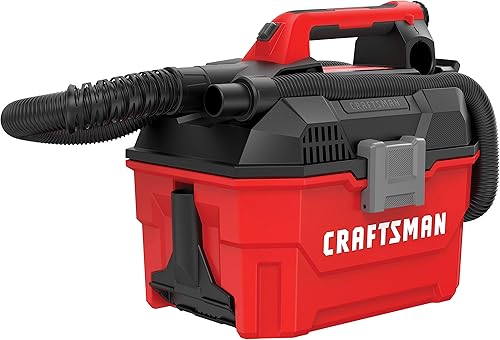
Craftsman CMCV002B V20 2-Gallon Cordless Wet/Dry Vac
Best for reaching around cars - 6
 Check it
Vacmaster DVOM202P 2.5-Gallon 20V Cordless Wet/Dry Vac
Best for brief household cleanups - 7
 Check it
Vacmaster DVTB244 4-Gallon 24V Cordless Wet/Dry Vac
Best for bulkier garage messes
How we chose these cordless shop vacs
We prioritized battery fit, useful hose reach, manageable capacity and attachment storage for portable cleanup. BriskErrand compared the features that affect how you carry, use and put away each vacuum.
A higher place in this roundup doesn't make a vac the right choice for every buyer. An existing battery collection, a hard-to-reach car interior or a need for corded backup can make a lower-ranked model the better fit.
We also kept airflow, water lift and runtime separate. They answer different buying questions, and runtime figures only help when you account for the battery and operating mode involved.
| Product | Best for | Capacity | Power | Hose | Our score |
|---|---|---|---|---|---|
| Milwaukee 0880-20 M18 2-Gallon Wet/Dry Vac | organized garage cleanup | 2 gallons | Milwaukee 18V slide-on battery | 6 ft | 8.8 |
| DeWalt DCV581H 20V MAX Cordless Wet/Dry Vac | mixed cleanup sessions | 2 gallons | DeWalt 20V MAX battery or cord | 5 ft | 8.6 |
| DeWalt DCV580H 20V MAX Cordless Shop Vac | DeWalt tool owners | 2 gallons | DeWalt 20V MAX battery | 5 ft | 8.5 |
| Milwaukee M18FPOVCL 2.5-Gallon Cordless Wet/Dry Vac | adjustable workshop cleanup | 2.5 gallons | 8.5 | ||
| Craftsman CMCV002B V20 2-Gallon Cordless Wet/Dry Vac | reaching around cars | 2 gallons | 7 ft 8 in | 8.5 | |
| Vacmaster DVOM202P 2.5-Gallon 20V Cordless Wet/Dry Vac | brief household cleanups | 2.5 gallons | 4 ft | 7.6 | |
| Vacmaster DVTB244 4-Gallon 24V Cordless Wet/Dry Vac | bulkier garage messes | 4 gallons | 24V battery | 7.5 |
The best cordless shop vacs by use
The Milwaukee 0880-20 leads for organized spot cleanup, while the other picks solve more specific problems. Choose by the job you repeat most often, then check the tradeoffs below before committing to a battery system.
Milwaukee 0880-20 M18 2-Gallon Wet/Dry Vac: Best for organized garage cleanup
- 2-gallon capacity
- Milwaukee 18V slide-on battery compatibility
- On-board hose and accessory storage
- Built-in blower port
A toolbox design keeps the hose and attachments together for cleanup between small jobs. It fits buyers who already use compatible Milwaukee batteries.
Pros
- Accepts Milwaukee 18V slide-on batteries
- Stores hose and accessories on board
- Blower port adds another cleanup option
Cons
- Small tank needs frequent emptying with bulky debris
- No corded backup
The Milwaukee 0880-20 fits a garage where cleanup happens between small tasks. Its toolbox design and on-board storage keep the hose, crevice tool and utility nozzle with the machine instead of scattered across a shelf.
Its 2-gallon tank suits loose debris from a repair, a bench cleanup or a small wet mess. The 6 ft hose gives you room to work without placing the body directly beside every patch of dirt.
It accepts Milwaukee 18V slide-on batteries, including Li-ion and NiCd packs. Milwaukee describes more than 30 minutes of runtime with an M18 REDLITHIUM HIGH DEMAND 9.0 battery pack, so don't apply that figure to every compatible battery.
Buy it if you value a self-contained cleanup kit and already have suitable batteries. Skip it if bulky waste regularly fills your vac or you need a plug-in fallback.
The blower port is useful for moving loose debris toward a collection point. Avoid using it to scatter fine dust around an enclosed workspace.
DeWalt DCV581H 20V MAX Cordless Wet/Dry Vac: Best for mixed cleanup sessions
- Corded or cordless operation
- 2-gallon tank
- 5 ft hose
- Washable, reusable filter
Use battery power for scattered messes and corded power when a job takes longer. This is the pick for buyers who regularly clean near an outlet as well as away from one.
Pros
- Runs from a cord or compatible battery
- Includes wide nozzle and crevice tool
- On-board accessory storage
Cons
- Battery and charger sold separately
- Small tank still needs emptying during longer jobs
The DeWalt DCV581H is the best fit here for buyers whose cleanup sessions vary in length. Corded and cordless operation lets you work away from an outlet, then plug in when you settle into a longer job.
That flexibility makes sense for a garage that doubles as a repair space. You can collect a small mess beside the car without a cord, then use outlet power while cleaning the work area.
Its washable, reusable filter supports routine care, and the wide gulper nozzle and crevice tool cover broad patches and narrow gaps. The 5 ft hose is manageable in a small work area, though you may reposition the body around larger objects.
The battery and charger are sold separately. Buy this model if you'll regularly use both power options; skip it if every job is away from electricity and you have no need for the cord.
Our DCV581H review explains its cleanup features and where its small tank sets limits.
DeWalt DCV580H 20V MAX Cordless Shop Vac: Best for DeWalt tool owners
- 2-gallon tank
- 5 ft crush-resistant hose
- Washable, reusable filter
- HEPA-rated wet-dry filter
A cordless-only choice for buyers with compatible DeWalt batteries and short cleanup tasks. The mounted handle and on-board storage keep the setup together between jobs.
Pros
- Washable, reusable wet-dry filter
- Crush-resistant hose
- On-board hose and accessory storage
Cons
- Battery and charger sold separately
- No corded power option
The DeWalt DCV580H suits buyers with compatible DeWalt batteries who want a dedicated cordless cleanup tool. It's a sensible match for brief jobs where bringing out an extension cord would add another step.
The mounted handle and on-board storage help keep the kit together between rooms or cleanup spots. Its crush-resistant hose is useful around a busy garage, but avoid closing doors on it or pulling the vacuum by the hose.
The HEPA-rated wet-dry filter is washable and reusable. Follow DeWalt's care instructions, and allow washed parts to dry fully before returning to dry debris collection.
Choose this model if you already have the battery setup and expect short cleanup rounds. Skip it if running out of charge would interrupt your main use, since there's no corded option.
Battery and charger are separate. Read our DeWalt DCV581H review if you're weighing the closely named alternative, and check the final model digit before ordering.
Milwaukee M18FPOVCL 2.5-Gallon Cordless Wet/Dry Vac: Best for adjustable workshop cleanup
- 2.5-gallon capacity
- 50 CFM
- 47 in water lift
- Two power levels
Two power levels suit buyers who want to adjust output between cleanup tasks. Its tank adds some room over the smaller Milwaukee without moving to the largest option here.
Pros
- Two power levels
- More capacity than the 2-gallon picks
- Includes HEPA filter
Cons
- 87 dB noise figure warrants attention in shared spaces
- Less tank capacity than the 4-gallon Vacmaster
The Milwaukee M18FPOVCL suits buyers who want adjustable output and more tank room than the smaller Milwaukee. Its two power levels let you select output for the task instead of using one setting for every mess.
It has a 2.5-gallon tank, 50 CFM of airflow and 47 in of water lift. Airflow matters when moving loose debris through the hose, while water lift describes suction against resistance.
Use the lower setting when it collects the debris effectively, then increase power when the job calls for it. That approach avoids spending battery capacity on output you don't need.
The included HEPA filter is useful for filtration, but it doesn't establish approval for hazardous dust. The 87 dB noise figure also makes this a poor choice if quiet operation is your main requirement.
Choose it for adjustable workshop spot cleanup. Our Milwaukee M18 wet/dry vac review covers the 0880-20, while our DeWalt and Milwaukee cordless vac comparison helps with the broader platform decision.
Craftsman CMCV002B V20 2-Gallon Cordless Wet/Dry Vac: Best for reaching around cars
- 7 ft 8 in hose
- 2-gallon capacity
- 35 CFM
- On-board hose and accessory storage
The longer hose suits car interiors and cleanup around a fixed bench. Choose it when moving the nozzle matters more than adding tank space.
Pros
- Long hose reaches around obstacles
- Includes wide nozzle and crevice tool
- On-board hose and accessory storage
Cons
- Battery and charger sold separately
- One power level
The Craftsman CMCV002B suits buyers who need to move the nozzle around obstacles while leaving the vacuum in one place. Its 7 ft 8 in hose is especially useful beside a car or under a fixed workbench.
Place the body on stable ground near an open car door, then work across the footwell and seat edges. Reposition it before the hose pulls tight, rather than dragging the body against a door sill.
Craftsman gives airflow of 35 CFM, and the vac includes a wide nozzle, crevice tool and HEPA filter. Its single power level keeps operation simple, though there's no lower-output mode to choose for light debris.
Buy it if reach is the obstacle that slows your usual cleanup, especially if you already have compatible V20 batteries. Skip it if you need a larger waste tank or prefer adjustable power.
The battery and charger are sold separately. Our shop vac accessories guide explains which attachments help with the gaps and surfaces you clean most.
Vacmaster DVOM202P 2.5-Gallon 20V Cordless Wet/Dry Vac: Best for brief household cleanups
- 2.5-gallon tank
- On-board hose and accessory storage
- Six accessories
- About 13–15 minutes of runtime
A choice for short cleanup rounds where you can set the vac close to the mess. Six accessories and on-board storage keep the tools together.
Pros
- Six accessories including a crevice tool
- On-board hose and accessory storage
- More tank space than the 2-gallon picks
Cons
- Short hose requires closer placement
- Runtime suits brief sessions
The Vacmaster DVOM202P fits buyers who clean one small area at a time. Vacmaster gives about 13–15 minutes of runtime, depending on use and attachments, which makes it better suited to brief rounds than an open-ended garage cleanup.
Its 2.5-gallon tank offers room for small-to-medium messes, while on-board storage keeps the hose and tools together. Six accessories, including a crevice tool, give you options for narrow spaces.
The 4 ft hose calls for careful placement. Set the body near the mess and move it as you progress, rather than stretching across furniture or reaching into a car from too far away.
Buy it for short household or garage jobs where you can keep the vacuum close. Skip it if you need to leave the body in one spot while covering a wide area.
Confirm battery and charger inclusion before ordering. If a cleanup routinely runs beyond a short session, the DCV581H's corded backup deserves more weight than extra tank space.
Vacmaster DVTB244 4-Gallon 24V Cordless Wet/Dry Vac: Best for bulkier garage messes
- 4-gallon tank
- 24V battery power
- ECO and Max modes
- Removable shoulder strap
The largest tank here suits debris loads that quickly fill a smaller vac. A removable strap helps with transport, but consider the weight before choosing it for frequent carrying.
Pros
- Largest tank in this group
- Removable shoulder strap
- ECO and Max modes
Cons
- 14.6 lb before collected debris adds weight
- Max mode has a shorter runtime than ECO
The Vacmaster DVTB244 suits buyers whose debris fills a small tank before the job is finished. Its 4-gallon capacity offers the most waste space in this group, making it a better fit for bulkier garage cleanup.
The toolbox-style housing has a removable shoulder strap for transport. At 14.6 lb before collected debris adds weight, it deserves a careful look if you carry equipment up stairs or between several work areas.
Vacmaster gives up to 25 minutes in ECO mode and 12 minutes in Max mode. Plan demanding cleanup around the shorter figure rather than expecting the longest runtime at full output.
Choose it when tank space is the main limit on your current cleanup routine. Skip it for a few crumbs or occasional seat crevices if carrying a larger unit would discourage you from using it.
Empty the tank before a long carry, especially after liquid pickup. The strap helps with transport, but collected water can add substantial weight.
How to choose the best cordless shop vac for your work
Choose by your usual mess and existing batteries, then check reach and runtime. A bigger tank helps with waste volume, while a longer hose solves access problems and corded backup solves battery interruptions.
Which cordless shop vac battery system fits your tools?
Start with compatible batteries you already own, provided they're available when you clean. A shared battery offers less convenience if it stays on the drill or saw you use at the same time.
Check the exact battery family and supported packs. Voltage numbers alone don't establish compatibility between brands or tool families.
Also consider charging logistics. A spare pack helps most when another charged battery is ready, rather than waiting beside the same empty charger.
If you're starting from scratch, compare the complete setup you need. That includes a compatible battery and charger, plus any attachment needed for your main job.
How much tank capacity do you need?
Choose tank size around what fills the container, rather than how large your garage is. A large room with scattered screws and crumbs can create less waste than one small repair involving bulky scraps.
Nominal gallons describe tank size, not a promise that you can collect that full amount of every material. Filters, internal parts and liquid shutoff arrangements affect usable space.
For wet cleanup, follow the manual's liquid limit and stop when required. Don't plan a job around filling the tank to its rim.
Our shop vac size guide explains how gallons relate to other specs. Browse shop vac picks if your usual debris load points toward a different size.
Is hose reach more important than a larger tank?
Prioritize hose reach when you can collect the mess easily but struggle to reach it. A larger tank won't help you get beneath a seat or around a bench without moving the body.
Think about the path the hose must follow, including bends around a door or furniture. The distance from the vacuum to the debris is only part of the reach you need.
Don't add a long extension hose without checking fit and suitability. Extra hose and tight bends add resistance, so the longest possible setup isn't always the most useful one.
What do airflow and water lift tell you?
Use CFM to compare airflow and water lift to compare suction against resistance. Neither figure replaces checking nozzle fit, hose layout and filtration for your job.
Compare measurements taken under similar conditions, and don't rank unlike units as though they were interchangeable. A voltage label also doesn't tell you which vacuum will move debris more effectively.
Our guide to what CFM means on a shop vac explains how airflow relates to loose debris pickup.
Can you use a cordless shop vac for car cleanup?
Yes, a cordless wet/dry vac suits loose dirt, crumbs and debris in a car. A crevice tool helps around seat tracks, while a wider nozzle makes more sense across open floor mats.
Remove large objects and loose mats first so battery time goes toward pickup. Work one section at a time, with the body positioned where the hose won't rub across painted panels.
Vacuum pickup doesn't replace an extractor for washing upholstery. Avoid soaking seats simply because the machine can collect liquids.
For a focused routine, see our guide to using a shop vac to detail a car.
How to set up a cordless wet/dry vac before cleanup
Match the filter arrangement and attachment to the material before switching on. A clear hose, correctly seated lid and suitable filter prevent avoidable interruptions and poor pickup.
Prepare for dry debris
Start with an empty, dry tank and a filter approved for the debris. Check that the filter is seated correctly and the lid latches are secure.
Inspect the hose for a plug from the last job. A blocked hose can make a charged vacuum seem weak, especially when a screw or wood chip catches more debris behind it.
Use the crevice tool for narrow gaps and a wider nozzle for open patches. If the nozzle pushes scraps ahead instead of collecting them, pick up oversized pieces by hand first.
Keep the vacuum stable while you work. Lift it by its handle when changing position instead of tugging the hose until the body tips or slides.
Change over for liquid pickup
Follow the model's instructions for wet pickup, including whether the filter stays fitted or needs changing. Don't assume every wet/dry machine uses the same arrangement.
Remove dry waste before collecting water so you don't create a tank of sludge. Keep the charger, battery contacts and controls away from the spill.
Stop if the motor sound changes sharply or the liquid shutoff activates. Switch off, disconnect the power source and empty the tank according to the manual.
For a wider step-by-step routine, our guide to how to use a shop vac covers preparation and cleanup.
Keep unsuitable materials out
Use these vacs for ordinary debris and suitable nonflammable liquid cleanup within their manuals' limits. Don't collect gasoline, solvents, hot ash or burning material.
A HEPA filter doesn't make a general-purpose vacuum suitable for asbestos, lead dust or every fine construction dust. Match hazardous-material work to the required equipment and controls.
How to keep pickup strong between jobs
Keep the filter, hose and tank clean enough for air to move freely. Routine care matters more than repeatedly reaching for a higher power setting when a blockage is the real problem.
Empty wet waste promptly and rinse the tank as directed. Let the tank and washable parts dry before closing the machine for storage.
Clean reusable filters only by the method approved for that filter. Avoid hard knocks, aggressive brushing or compressed air unless the instructions permit them.
Inspect filter folds and seals for damage when cleaning. Replace damaged parts rather than expecting a torn filter to contain dust.
Wipe debris from the lid seal and check hose connections. Store the attachments on board so the next cleanup starts with the right tool instead of a search through drawers.
Charge batteries according to their instructions and store them away from damp areas or excessive heat. Put the vacuum away with a clear hose and an empty tank.
Common cordless shop vac mistakes to avoid
The biggest buying mistake is solving the wrong limit. Work out whether your current problem is access, waste volume, battery availability or pickup before choosing a replacement.
- Buying more tank than you'll carry. Extra space helps bulky cleanup, but it adds little value if the body stays on a shelf because moving it feels like work.
- Planning from the longest runtime alone. Use the figure tied to the mode and battery you'll actually use, with enough margin to finish.
- Treating corded backup as unlimited capacity. Outlet power removes a charging interruption, but a small tank and dirty filter still require attention.
- Using a crevice tool everywhere. Its narrow opening helps in gaps but slows coverage across open areas.
- Blowing fine dust around a room. Collect dust at the source or vacuum it with suitable equipment instead of moving it into the air.
- Putting the vac away wet. Trapped moisture leaves the next job starting with a dirty tank and damp parts.
Before replacing a vacuum for weak pickup, check the nozzle, hose, filter and lid seal. That short inspection can reveal an obstruction or maintenance issue without changing machines.
Which cordless shop vac should you choose?
Choose the best cordless shop vac for the job you'll repeat, then make sure the battery setup is ready to support it. The Milwaukee 0880-20 fits organized spot cleanup, particularly when compatible batteries are already part of your garage.
Pick the DCV581H when battery freedom and plug-in backup both matter. Choose the DCV580H when you're committed to brief cordless jobs and already have the DeWalt battery setup.
The Craftsman is the stronger fit when reaching around a car is your main obstacle. Choose the Milwaukee M18FPOVCL if adjustable output and a modest increase in tank space better match your workshop routine.
The smaller Vacmaster suits brief cleanup rounds with the body close by. Choose the DVTB244 when bulkier debris makes frequent emptying your main complaint, provided its carrying weight fits your routine.
If you're still choosing a battery family, compare the DeWalt and Milwaukee cordless shop vacs. For longer jobs or larger waste loads, our best wet-dry vac picks can help you decide whether a corded machine fits better.
Our top 3 picks at a glance
-
1
Best for organized garage cleanup
Milwaukee 0880-20 M18 2-Gallon Wet/Dry Vac
8.8/10 our score
See it on Amazon -
2
Best for mixed cleanup sessions
DeWalt DCV581H 20V MAX Cordless Wet/Dry Vac
8.6/10 our score
See it on Amazon -
3
Best for DeWalt tool owners
DeWalt DCV580H 20V MAX Cordless Shop Vac
8.5/10 our score
See it on Amazon
Frequently asked questions
What should I look for in a cordless shop vac?
Start with battery compatibility, then match tank capacity and hose reach to your usual mess. Check battery and charger inclusion before buying, especially with tool-only models; for longer cleanup sessions near an outlet, a corded and cordless model can be more practical than relying on spare batteries.
Can a cordless shop vac pick up water?
Yes, these wet/dry cordless shop vacs can collect water when configured according to their manuals; use the required filter arrangement, observe liquid limits and empty the tank promptly. Keep the battery and controls dry; our guide to using a shop vac for water explains the basic setup.
How long does a cordless shop vac run?
Runtime depends on battery capacity, power mode and the work; Vacmaster gives up to 25 minutes in ECO mode and 12 minutes in Max mode for the DVTB244, and about 13–15 minutes for the DVOM202P. Plan around active pickup time and leave room for a job taking longer than expected.
Is a cordless shop vac strong enough for a workshop?
A cordless shop vac suits scattered debris and cleanup after small workshop jobs; continuous dust collection requires matching the tool's airflow needs, hose connection and dust-control requirements to the vacuum. Our guide to shop vacs and dust collectors explains when a different collection system makes more sense.


