6 Best Wet-Dry Vacs (October 2026)
The best wet-dry vacuums include the DeWalt DXV12P 12-Gallon Wet/Dry Vac for general garage cleanup, the Vacmaster VBVB611PF 6-Gallon Wet/Dry Vac for patio cleanup, and the Craftsman CMXEVBE17040 4-Gallon Wet/Dry Vac for small household jobs.
On this page (8 sections)
- Which best wet dry vac pick fits your cleanup?
- How did we choose these wet-dry vacs?
- How do you choose the best wet dry vac size?
- Which suction, reach, and tool details matter?
- How should you set up a wet-dry vac?
- What care keeps a wet-dry vac ready?
- Which buying and cleanup mistakes should you avoid?
- Which best wet dry vac should you bring home?
The best wet dry vac for most garages is the DeWalt DXV12P, a general-purpose choice for mixed debris and occasional liquid pickup. Choose a smaller vacuum for quick household jobs, a wall-mounted model for a fixed work area, or a drain-equipped tank for frequent wet cleanup.
Start with the mess you handle most often, then decide how much vacuum you can store and move. A large tank helps with bulky debris, but it also makes emptying and carrying more demanding.
If you are still deciding between a shop vac and household vacuum, start with our complete shop vac buyer's guide. For a broader shortlist, see our best shop vac picks.
Our picks at a glance
-
1
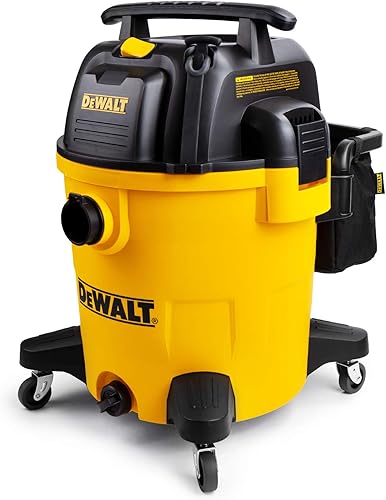 Best for general garage cleanup
DeWalt DXV12P 12-Gallon Wet/Dry Vac
8.7/10 our score
See it on Amazon -
2

-
3
 Best for small household jobs
Craftsman CMXEVBE17040 4-Gallon Wet/Dry Vac
8.4/10 our score
See it on Amazon
- 4
 Check it
Vacmaster VWMB508 5-Gallon Wall-Mount Wet/Dry Vac
Best for crowded workshops - 5
 Check it
Shop-Vac 5761311 12-Gallon Wet/Dry Vac
Best for frequent wet cleanup - 6
 Check it
Vacmaster VJH1612PF 16-Gallon Wet/Dry Vac
Best for bulky workshop cleanup
Which best wet dry vac pick fits your cleanup?
Choose the DeWalt for mixed garage work, then move to a specialist pick if portability, wall storage, blowing, or draining matters more. Each vacuum below suits a different cleanup routine, so the highest-ranked model is not automatically the right size for your home.
DeWalt DXV12P 12-Gallon Wet/Dry Vac: Best for general garage cleanup
- 12-gallon capacity
- 7-foot hose
- 20-foot cord
- 5.5 peak HP
A general-purpose choice for garages with mixed wet and dry cleanup. Its tank and cord suit a work area where a compact vacuum would need more frequent emptying.
Pros
- Room for bulky garage debris
- 20-foot cord
- Indoor and outdoor use
Cons
- 23.2 pounds before collecting debris
- Needs more storage room than compact picks
The DeWalt DXV12P suits a garage where one vacuum needs to handle several kinds of ordinary mess. Its 12-gallon tank leaves room for bulky dry debris without moving into the largest size here.
A 7-foot hose and 20-foot cord give you flexibility around a workbench or parked vehicle. Keep the tank near the work and use the hose to reach the mess, rather than dragging the vacuum by its hose.
This model weighs 23.2 pounds empty, so it makes more sense for a ground-level garage than a routine built around stairs. Allow room to remove the motor head and empty the tank, not just enough space to park it.
Choose it if your small household vacuum is too limited for garage debris and you want one general-purpose machine. Skip it if most jobs involve a few crumbs in a car or a small spill indoors.
Its tank size is the compromise here: useful room without choosing the biggest unit. For higher-volume work, compare the 16-gallon shop vac options.
Vacmaster VBVB611PF 6-Gallon Wet/Dry Vac: Best for patio cleanup
- Detachable blower
- 70 CFM airflow
- 190 MPH maximum blowing speed
- 16-foot cleaning reach
Choose this model when your cleanup includes vacuuming debris and blowing it away from outdoor surfaces. A one-hand release detaches the blower, and on-board storage gathers the tools.
Pros
- Detachable blower with one-hand release
- 13.5-pound empty weight
- Includes blower adapter and tube
Cons
- Less tank room for bulky cleanup
- Shorter combined reach than other Vacmaster picks
The Vacmaster VBVB611PF suits buyers who want to vacuum debris and use a separate blower during the same cleanup. Its one-hand release detaches the blower, and the included adapter and tube support that change.
Vacmaster specifies 70 CFM of airflow and a maximum blowing speed of 190 MPH. Use the blower to gather loose material in a clear area, then collect it instead of sending dust toward people, vehicles, or open doors.
The unit weighs 13.5 pounds empty, making it lighter than the other picks with stated weights. Its balanced top handle is useful when carrying the empty vacuum between storage and the work area.
Choose it for mixed cleanup where blowing is a real part of the job. Skip it if you mainly collect large amounts of liquid or want to clean a wide area from one outlet, since its combined cleaning reach is 16 feet.
Keep the blower pieces with the vacuum so changing tasks stays simple. If outlet access is the bigger problem, see how to choose a cordless shop vac.
Craftsman CMXEVBE17040 4-Gallon Wet/Dry Vac: Best for small household jobs
- 4-gallon capacity
- Car nozzle and dusting brush
- Accessory caddy
- 3-year limited warranty
A smaller tank and included car-cleaning tools suit short cleanup sessions around the home and garage. The attached caddy keeps the nozzles and brush together between jobs.
Pros
- Includes car nozzle and dusting brush
- Attached accessory caddy
- 3-year limited warranty
Cons
- Frequent emptying during larger jobs
- Indoor use only
The Craftsman CMXEVBE17040 suits small home projects and car interiors, especially when the right attachments matter more than tank volume. Its 4-gallon drum is the smallest in this group.
The car nozzle, utility nozzle, dusting brush, and 2 extension wands cover several common surfaces. Start with the wider tool for loose material, then change tools for seat edges, corners, and other tight areas.
Its attached caddy gives the accessories a home between jobs. That matters in a shared garage, where a useful nozzle can otherwise disappear into a drawer just when you need it.
The vacuum weighs 16 pounds and has a 15-foot cord, so plan where you will plug it in before working around a vehicle. Craftsman backs it with a 3-year limited warranty.
Choose it for short cleanup sessions with modest amounts of debris. Skip it for bulky workshop waste or repeated liquid pickup that would make emptying a small tank the main chore.
For a vehicle-first choice, compare the dedicated shop vac picks for car detailing.
Vacmaster VWMB508 5-Gallon Wall-Mount Wet/Dry Vac: Best for crowded workshops
- Wall-mount storage
- Remote-control handle
- 78 CFM airflow
- 41-foot cleaning reach
Wall storage frees floor space near a regular cleanup area. The remote-control handle lets you switch the vacuum on and off without returning to the tank.
Pros
- Quick-release wall mount
- Remote-control handle
- Includes cartridge and foam filters
Cons
- Needs a suitable mounting location
- Indoor use only
The Vacmaster VWMB508 is the right fit when floor space is scarce and cleanup stays near one work area. The quick-release wall mount stores the tank off the floor, while the remote-control handle puts the switch near your hand.
Vacmaster specifies 78 CFM of airflow and a 41-foot combined cleaning reach. Treat that reach as a planning figure for the hose and cord together, not as the distance you can clean in every direction from the mount.
Walk the intended hose route before installing it. A workbench, parked car, doorway, or shelf can force a longer path than a straight measurement suggests.
The package includes 12 accessories, including cartridge and foam filters, and a large carry handle allows portable use. Leave enough space below and around the mount to release the vacuum and service the tank.
Choose it for a garage or workshop with a dependable cleanup station. Skip it if most jobs require moving between floors or distant rooms, since those trips reduce the benefit of fixed wall storage.
Shop-Vac 5761311 12-Gallon Wet/Dry Vac: Best for frequent wet cleanup
- 12-gallon capacity
- Built-in tank drain
- 100 CFM blower
- Stainless steel tank
The built-in drain suits buyers who expect regular liquid pickup and want to avoid tipping a full tank. Included dry and wet filtration supplies also help with task changes.
Pros
- Built-in tank drain
- Top and side carry handles
- Includes foam sleeve and dry filter bag
Cons
- 22.9 pounds before collecting debris
- Needs clearance for its 26.2-inch height
The Shop-Vac 5761311 suits buyers who expect regular liquid pickup and want easier emptying. Its built-in drain lets you release collected liquid without lifting and tipping the full tank.
The stainless steel drum holds 12 gallons by volume. Plan a suitable place to drain it before starting, since a drain is most useful when you can position the vacuum near an appropriate disposal point.
Included equipment covers both wet and dry tasks: a cartridge filter, foam sleeve, dry filter bag, floor nozzle, crevice tool, and extension wands. Keep unused filtration supplies clean and dry rather than leaving them beside a wet tank.
Top and side carry handles offer grip options, but the empty vacuum already weighs 22.9 pounds. Roll it where practical and empty it before carrying it over steps.
Choose it when wet cleanup is common enough to make draining a priority. Skip it if you mainly need a small vacuum to carry around the house.
If workshop dust is your main concern, read shop vac vs dust collector before choosing equipment.
Vacmaster VJH1612PF 16-Gallon Wet/Dry Vac: Best for bulky workshop cleanup
- 16-gallon capacity
- 145 CFM airflow
- 27-foot cleaning reach
- Large drain port
The largest tank here suits cleanup that produces bulky debris and repeated trips to empty a smaller vacuum. A padded push handle helps move it across a work area.
Pros
- Largest tank in this roundup
- Padded push handle
- Large drain port
Cons
- Needs substantial floor storage space
- Indoor use only
The Vacmaster VJH1612PF suits a workshop where bulky debris fills smaller tanks too quickly. Its 16-gallon drum is the largest here, and Vacmaster specifies 145 CFM of airflow.
A padded push handle and wide-stance casters support moving the vacuum around the work area. The large drain port also matters if your routine includes liquid pickup, provided you have a practical place to empty it.
This is a substantial machine at 27.2 x 21.3 x 35.4 inches and 25.8 pounds empty. Measure the storage spot with room for the handle and tools, then check the route between that spot and your usual work area.
Choose it for frequent, larger cleanup sessions on the same floor. Skip it for short household jobs, stair-heavy routes, or storage where you must lift the vacuum onto a shelf.
The benefit is fewer interruptions to empty bulky material, not permission to fill the tank until it becomes difficult to move. Compare shop vac sizes and how they work if you are unsure you need this much drum space.
How did we choose these wet-dry vacs?
We compared capacity, reach, included tools, storage, and emptying features against common home and garage jobs. The scores reflect those features and each model's fit for a general wet-dry vacuum shopper.
The DeWalt leads because it balances tank room and cord reach for mixed cleanup. The smaller and more specialized models earn their place through features that solve a specific problem, such as carrying less bulk or keeping the floor clear.
Peak horsepower did not decide the order. DeWalt explains that peak HP is a comparison figure rather than operating horsepower, so a larger number should not outweigh a better tank size or more useful attachment set.
How do you choose the best wet dry vac size?
Choose the smallest tank that handles your normal cleanup without constant emptying. Size for the jobs you do each week, then consider how you would handle an occasional larger mess.
Which wet dry vac size fits small jobs?
A compact tank fits car interiors, short home projects, and scattered debris around a workbench. It also encourages you to empty the vacuum before putting it away instead of storing last month's dirt in a large drum.
Small capacity does not always mean the lightest machine. Compare empty weight and shape separately, especially if you need to carry the vacuum through narrow doors or up stairs.
Our guide to choosing the right shop vac size can help narrow the capacity before you compare extra features.
When is a larger tank worth the space?
A larger tank helps when loose material takes up room quickly, such as shavings and bulky workshop debris. It is less useful when every cleanup ends with only a thin layer of dirt at the bottom.
Tank volume is not the amount of liquid you should expect to collect. Follow the manual's fill limit and stop sooner if the load becomes difficult to move safely.
Water weighs about 8.3 pounds per gallon, so liquid pickup changes the carrying load fast. A drain helps with emptying, but you still need to plan how the vacuum will reach the disposal point.
Which suction, reach, and tool details matter?
Match airflow, suction, hose layout, and attachments to the material and location you clean. A useful nozzle and a clear hose can matter more to a small job than a bigger motor label.
Read airflow and suction as different measures
CFM measures how much air moves through the vacuum, which helps carry loose material along the hose. Water lift describes suction pressure and is a different measurement, so the two figures are not interchangeable.
A clogged filter, blocked nozzle, or packed hose restricts airflow. Before blaming the motor for weak pickup, inspect those parts with the vacuum unplugged.
Do not use the Shop-Vac's blower airflow figure as if it were vacuum airflow. Blower output and suction performance describe different tasks.
Measure the cleaning route, not just the room
Cord length determines where the tank can stand, while hose length determines where the tool can reach from there. A combined reach figure does not give you that same distance around every obstacle.
Think through both sides of a parked car, the far end of a bench, and the nearest suitable outlet. Keep cords and hoses out of walkways, and move the tank when stretching them would create a trip hazard.
Buy tools for surfaces you actually clean
A floor nozzle helps cover open areas, a crevice tool reaches narrow gaps, and extension wands reduce bending. A brush suits delicate or uneven surfaces, but check that the surface tolerates its bristles.
Confirm hose and fitting sizes before buying extra attachments. Our guide to shop vac accessories you actually need explains which additions solve common cleanup problems.
How should you set up a wet-dry vac?
Set up the vacuum for the material you are about to collect, with the power disconnected during assembly and filter changes. Wet and dry modes can require different filtration, even on the same machine.
Prepare for dry debris
Begin with an empty, dry tank and the filter arrangement required by the manual. Seat the filter, hose, and lid correctly so debris follows the intended collection path.
Use a compatible dry bag when the instructions allow one and it suits the material. A bag can make disposal neater, but it does not turn an ordinary vacuum into equipment approved for hazardous dust.
Choose a nozzle opening large enough for the debris. Pick up oversized scraps by hand rather than forcing them into a hose where they can lodge at a bend.
Change the setup before collecting water
Unplug the vacuum and remove dry debris before switching to liquid pickup. Follow the model's instructions for removing a dry bag and fitting, removing, or changing filters.
Keep electrical connections dry, use the protected outlet specified by the manual, and keep the motor head out of the liquid. Never work in standing water where an electrical hazard may be present.
If the vacuum uses a float shutoff, stop when it activates or the suction changes sharply. Switch off and empty the tank rather than trying to draw more water through it.
Check the job before switching on
Identify what is on the floor before vacuuming it. Do not collect hot ash, burning material, flammable liquids, or unknown chemicals with a general-purpose wet-dry vac.
For construction dust that may contain silica, lead, or asbestos, use equipment and procedures approved for that hazard. A cartridge filter by itself does not establish suitability.
For the full starting sequence, see how to use a shop vac.
What care keeps a wet-dry vac ready?
Empty the tank promptly, maintain the filters, and dry wet parts before storage. These habits reduce odors, protect airflow, and make the next task easier to start.
After liquid pickup, unplug the vacuum and dispose of the contents in a suitable place. Rinse the tank as the manual allows, then let it and any washable parts dry fully before closing everything up.
Clean filters using the method their instructions permit. Do not wash a filter unless it is washable, and replace one that is damaged or no longer cleans properly.
Inspect the hose for packed debris and check seals, latches, and fittings for dirt or damage. Refit the lid evenly instead of forcing a latch closed over trapped material.
Store the vacuum where the cord, hose, and accessories are supported. Keep a small clear space around it so removing the tank does not require moving several other tools first.
Which buying and cleanup mistakes should you avoid?
Avoid choosing by peak HP or tank size alone, and do not assume every filter suits every mess. The most useful vacuum is one you can set up, move, empty, and store without a struggle.
- Buying for one rare job: A large vacuum can become an awkward choice for the small tasks that make up most of your cleanup.
- Ignoring emptying access: Check whether you can remove the lid, lift out a bag, or reach the drain in your planned storage and work areas.
- Treating blowing as collection: Blowing moves debris somewhere else. Gather it where you can collect it, rather than scattering dust across a clean area.
- Leaving wet debris in the tank: Damp dirt becomes harder to deal with after storage. Empty and dry the vacuum after the job.
- Expecting household floor care: A shop vacuum collects loose mess but does not automatically scrub hard floors, wash carpets, or replace every household vacuum task.
For regular tool-connected dust capture, check the tool's extraction needs and the vacuum's suitability before buying. General workshop cleanup and continuous dust collection place different demands on the equipment.
Which best wet dry vac should you bring home?
Choose the DeWalt DXV12P if your normal week includes mixed garage cleanup and you have room to keep a general-purpose canister ready. It is the best wet dry vac here for buyers without a stronger need for a specialist layout.
Pick the Craftsman for small household and vehicle jobs, or the detachable-blower Vacmaster when blowing debris is part of your routine. Choose the wall-mounted Vacmaster when a fixed cleanup station would free useful floor space.
For frequent liquid pickup, favor the Shop-Vac's drain-focused setup. Move to the larger Vacmaster when bulky debris regularly interrupts work with trips to empty a smaller tank.
Before ordering, measure the storage space and trace the route to the outlet and emptying point. If capacity is still the deciding question, use our shop vac size guide to make the final choice.
Our top 3 picks at a glance
-
1
Best for general garage cleanup
DeWalt DXV12P 12-Gallon Wet/Dry Vac
8.7/10 our score
See it on Amazon -
2
-
3
Best for small household jobs
Craftsman CMXEVBE17040 4-Gallon Wet/Dry Vac
8.4/10 our score
See it on Amazon
Frequently asked questions
What size wet-dry vac should I buy?
Choose a 4- to 6-gallon vacuum for short household and car-cleaning jobs, or a larger tank for bulky garage debris. Consider how far you must carry it and where you will empty it.
Tank volume is not usable liquid capacity, so always follow the model's fill limits.
Can a wet-dry vac pick up water?
Yes, a wet-dry vac can collect water with the correct filter setup and within its fill limits. Unplug it before changing filters, and keep the plug and outlet dry.
Our guide to using a shop vac for water explains the setup and precautions before you begin.
Is higher CFM better in a wet-dry vac?
Higher CFM means more air moves through the vacuum each minute, which helps carry loose debris. Compare it alongside suction, filtration, and the hose setup rather than treating it as a complete performance score.
See what CFM means on a shop vac for help reading airflow figures.
Should I choose a wall-mounted wet-dry vac?
Choose a wall-mounted vacuum if most cleanup happens near one work area and floor storage is tight. Plan the outlet, hose route, and room needed to remove the tank.
A portable canister is a better fit if you regularly move between rooms or carry the vacuum up stairs.


