Ridgid vs Craftsman Shop Vac: Which Is Better? (October 2026)
For a Ridgid vs Craftsman shop vac choice, pick the Craftsman CMXEVBE17595 for mixed garage cleanup, the Ridgid 1610RV for crossing rough surfaces, or the Ridgid RT1200 for tighter storage.
On this page (9 sections)
- Ridgid vs Craftsman shop vac: which should you choose?
- What does each 16-gallon shop vac include?
- Which one is easier to move and store?
- How do the hoses affect everyday use?
- Which shop vac is better for wet cleanup?
- When is the smaller Ridgid RT1200 the better buy?
- How should you set up and care for either brand?
- Which warranty and replacement parts should you check?
- What is the final decision on Ridgid vs Craftsman shop vacs?
For ridgid vs craftsman shop vac shoppers, the Craftsman CMXEVBE17595 is the best fit for mixed garage cleanup, while the Ridgid 1610RV suits routes with rough surfaces or thresholds. Choose the smaller Ridgid RT1200 when storage space matters more than maximum tank room.
Start with your cleanup route and the tools you'll use each week. A vacuum that fits beside the workbench and reaches the car is a better buy than a larger model that's awkward to bring out.
 Best for mixed garage cleanup
Craftsman CMXEVBE17595 16-Gallon Wet/Dry Shop Vac
 Best for crossing rough surfaces
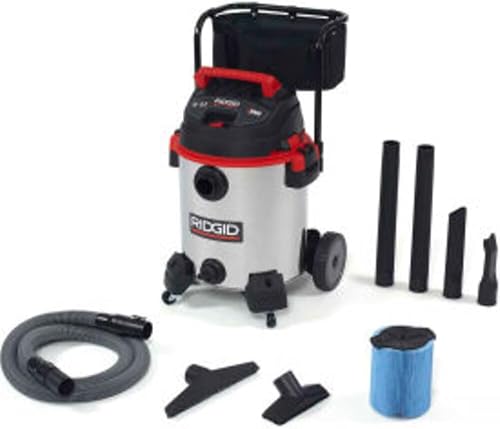
Ridgid 1610RV 16-Gallon Wet/Dry Shop Vac
Ridgid vs Craftsman shop vac: which should you choose?
Choose Craftsman for a ready-to-use mix of cleaning tools, the Ridgid 1610RV for its transport setup, or the RT1200 for a smaller storage footprint. Those differences give each model a clear buyer.
The Craftsman and 1610RV both have 16-gallon tanks and 6.5 Peak HP motors. The RT1200 has a 12-gallon tank and 5.0 Peak HP motor, making it the smaller alternative rather than a direct size match.
Matching Peak HP labels aren't proof of equal suction or airflow. For this comparison, buy around the tank, hose, attachments and route through your workspace.
| Product | Best for | Capacity | Motor | Hose | Our score |
|---|---|---|---|---|---|
| Craftsman CMXEVBE17595 16-Gallon Wet/Dry Shop Vac | mixed garage cleanup | 16 gallons | 6.5 Peak HP | 7 ft Dual-Flex | 9.0 |
| Ridgid 1610RV 16-Gallon Wet/Dry Shop Vac | crossing rough surfaces | 16 gallons | 6.5 Peak HP | 8 ft | 8.0 |
| Ridgid RT1200 12-Gallon Wet/Dry Vac | tighter garage storage | 12 gallons | 5.0 Peak HP | 8 ft locking | 7.8 |
Ridgid vs Craftsman shop vac choices by cleanup routine
Choose Craftsman if your routine moves from garage-floor debris to car interiors and occasional wet messes. Its included tools cover those changes without requiring you to choose several attachments separately.
Choose the Ridgid 1610RV if the vacuum regularly travels between work areas over uneven surfaces. Its cart layout addresses that need more directly than a longer accessory list.
Choose the RT1200 if you want a vac for routine cleanup but don't want either larger body occupying your storage space. Skip all 3 if your main need is carrying a vacuum through the house for a few crumbs.
Our complete shop vac buyer's guide can help if you're still deciding between a large garage machine and a smaller everyday vacuum.
What does each 16-gallon shop vac include?
The Craftsman has the broader included tool set, while the Ridgid 1610RV focuses more on transport. Count the attachments you'll actually use rather than treating every extra piece as a benefit.
Craftsman tools for floors, cars and wet messes
The Craftsman includes a car nozzle, utility nozzle, wet nozzle, 2 extension wands, a Qwik Lock filter and a dust collection bag. That package suits a shared garage where one vacuum handles several kinds of cleanup.
Use the utility nozzle for open floor areas and the car nozzle where its shape fits seats or footwells. The wands let you work across the floor without keeping the hose end close to your hands.
The included bag is useful for compatible dry debris because it can make disposal more contained. It doesn't turn the machine into a vacuum approved for every fine or hazardous dust.
Choose this model if you want those tools from the start. Skip it if you mainly need a narrow crevice attachment and have little use for the larger tank or wet nozzle.
For help choosing extras, see our guide to shop vac accessories. Match the tool's shape and connection to the job before buying another attachment.
Ridgid 1610RV tools for targeted cleanup
The Ridgid 1610RV includes a crevice tool and nozzle. Its stainless steel tank, drain and blower port make it suitable for varied cleanup, but check which additional tools your routine would require.
A crevice tool suits narrow gaps that a broad floor nozzle can't enter. For car cleanup, plan the full job, including seat gaps, open carpet and awkward footwells, rather than choosing around one attachment.
Buy the 1610RV when its cart solves a recurring transport problem. Skip it if it will stay on one smooth floor and you'd get more use from the Craftsman's included nozzle choices.
Which one is easier to move and store?
The Ridgid 1610RV is the strongest fit for uneven routes, while the RT1200 takes up less room. Measure your storage opening and inspect the path to the cleanup area before choosing.
The 1610RV combines a cart, push handle and large rear wheels. Ridgid says these features help it cross rough terrain, thresholds and stairs.
Stairs still require care, especially with debris or liquid in the tank. Empty the vacuum first, keep a secure grip and follow the manual's handling instructions rather than assuming wheels remove the lifting work.
Its body measures 19.8 x 19.8 x 28.5 in. The Craftsman measures 21.03 x 23.8 x 26.7 in, so the Ridgid is narrower but taller.
The RT1200 measures 17.75 x 17.75 x 24.13 in and has 360-degree caster wheels. That smaller body is easier to fit into a limited storage spot, while the casters suit frequent turns around a workbench.
The Craftsman has on-board hose storage plus accessory and cord organizers. The RT1200 has an accessory caddy, which helps keep its tools with the vacuum.
Allow room for the stored hose and attachments as well as the tank. A body that fits under a shelf can still be awkward to remove if the hose catches on nearby tools.
Our guide to shop vac sizes explains how outside dimensions and tank volume affect the choice.
How do the hoses affect everyday use?
Choose the Craftsman for flexible hose ends, the RT1200 for a locking connection, or the 1610RV for extra reach over the Craftsman. Hose handling matters most when you work around objects instead of across an open floor.
The Craftsman's hose is 2.5 in wide and 7 ft long. Craftsman says its Dual-Flex design allows 180-degree movement at each end to help resist kinking and crushing.
The 1610RV has an 8 ft hose. That extra foot can help reach around a parked vehicle or bench, though you should still position the tank close enough to avoid stretching the connection.
The RT1200 has a 1-7/8 in by 8 ft locking hose. Ridgid says the connection stays attached during use and the smooth interior helps reduce clogs.
A wider passage generally gives bulky debris more room, while a narrower hose can be easier to work through confined areas. Neither advantage removes the need to check tool fit or clear an obstruction.
Don't drag the vacuum by its hose, even when the connection locks. Move the tank using the proper handle and keep sharp bends out of the hose path.
Our CFM guide explains airflow if you're comparing other models too. Avoid treating motor labels, hose diameter and airflow as interchangeable measures.
Which shop vac is better for wet cleanup?
All 3 can collect water with the correct wet-pickup setup. Choose based on where you'll empty the tank and how far you'll need to move it afterward.
The Craftsman has an oversized drain, the RT1200 has a large drain, and the 1610RV also has a drain. These let you release liquid without relying only on lifting and tipping the tank.
Set the vacuum near a suitable emptying point before starting. A tank of water becomes heavy, so don't plan to fill it downstairs and carry it upstairs afterward.
Tank volume isn't the same as usable liquid capacity. Craftsman notes that actual collection capacity varies with debris, filter condition and other factors; follow each vacuum's operating limit.
Check the manual for filter changes before switching from dry debris to water. Remove the dry collection bag as directed, and don't assume the same filter arrangement suits every amount of liquid.
Keep the plug and electrical connections away from water. These vacuums are for appropriate wet cleanup, not flammable liquids, and a large tank doesn't make contaminated floodwater an ordinary household spill.
Afterward, empty the tank, clear the drain and let the tank and hose dry before storage. Our guide on whether a shop vac can vacuum water covers the changeover in more detail.
When is the smaller Ridgid RT1200 the better buy?
The RT1200 is the better fit when a large tank would mostly occupy storage space. It still gives you tools for floor, car and wet cleanup without taking the larger models' floor area.
Its kit includes a utility nozzle, wet nozzle, car nozzle, 2 extension wands and a standard filter. A blower function adds another use for moving loose leaves or debris where blowing is appropriate.
Pick it for regular cleanup around a bench or vehicle when you're willing to empty more often. Less tank room matters most with bulky debris that fills the drum quickly.
Skip it if you routinely collect large amounts of debris and want fewer emptying stops. Also choose the 1610RV instead if crossing uneven routes is the main problem you're trying to solve.
Don't buy the smaller Ridgid just because its motor label is lower, or reject it for that reason. Storage, tool fit and the kind of debris you collect are more useful starting points.
For more alternatives, browse our shop vac picks.
How should you set up and care for either brand?
Start with the correct filter, a clear hose and secure connections. Basic setup prevents avoidable mess and helps you spot a blockage before blaming the motor.
Before the first job, assemble the handles, wheels and storage parts according to the manual. Check that the tank is empty, the lid is secured and the hose is connected to the suction inlet rather than the blower port.
For dry pickup, choose a filter and compatible bag suited to the debris. Don't assume an included standard filter is appropriate for drywall dust, concrete dust, ash or hazardous material.
Make a clear route for the cord and hose so neither crosses a busy walking path. If an extension cord is needed, follow the manual's requirements and avoid damaged cords.
If pickup weakens, switch off and unplug the vacuum before inspecting it. Check the nozzle, hose, bag, filter and tank in that order instead of continuing to run it against a clog.
Empty before debris packs tightly around the filter. Clean or replace the filter according to its instructions, and don't reinstall a washed filter until it is fully dry and approved for reuse.
Store the hose without tight bends and keep the nozzles together. Our guide to how to use a shop vac walks through setup and changes between jobs.
Which warranty and replacement parts should you check?
Craftsman provides a 3-year limited warranty, while Ridgid covers the RT1200 against defects in materials and workmanship for the tool's lifetime. Read the terms for the exact model rather than choosing by a brand-wide slogan.
The RT1200's coverage ends when it becomes unusable for reasons other than those defects. The 1610RV has a manufacturer warranty, so confirm its specific coverage before making warranty length a deciding factor.
For supplies, match the model number and compatible part number. Don't assume a filter or bag fits just because it carries the same brand name.
The Craftsman and RT1200 both use Qwik Lock filter fastening systems. That helps with filter changes, but the shared system name isn't a reason to assume their replacement filters are interchangeable.
Check that you can obtain the filter type and bags your usual debris requires. Those repeat supplies matter more over time than an extra nozzle that stays in storage.
What is the final decision on Ridgid vs Craftsman shop vacs?
Resolve the Ridgid vs Craftsman shop vac choice by picturing your next several cleanup jobs. Pick the model that fits the route, storage spot and attachments those jobs require.
Choose Craftsman CMXEVBE17595 for mixed garage work when you want several useful nozzles and a dry collection bag included. It earns the top spot here because that package fits a broad range of routine cleanup.
Choose Ridgid 1610RV when moving between work areas is the deciding task. Its cart and large rear wheels give you a clear reason to choose it over a vacuum that will mostly stay parked.
Choose Ridgid RT1200 when the smaller body solves a storage problem and you're comfortable emptying more often. Before ordering, measure the storage space and identify where you'll empty wet debris.
For another brand comparison, read our Shop-Vac vs Ridgid matchup. If none of these fits your routine, browse our shop vac picks for other cleanup needs.
Frequently asked questions
Is Ridgid or Craftsman better for a shop vac?
Craftsman is the better choice here for mixed garage cleanup because the CMXEVBE17595 includes several task nozzles and a dust bag. Choose the Ridgid 1610RV when its cart and large rear wheels solve a transport problem, or the RT1200 when a smaller body fits your storage space.
Are the Ridgid and Craftsman shop vacs the same size?
The Craftsman CMXEVBE17595 and Ridgid 1610RV both have 16-gallon tanks, but their outside shapes differ; Craftsman measures 21.03 x 23.8 x 26.7 in, while the Ridgid measures 19.8 x 19.8 x 28.5 in. The RT1200 is smaller at 17.75 x 17.75 x 24.13 in.
Which shop vac has more accessories?
The Craftsman includes a car nozzle, utility nozzle, wet nozzle, 2 extension wands, filter and dust collection bag; the Ridgid RT1200 includes the same nozzle types and wands, plus a standard filter. The Ridgid 1610RV includes a crevice tool and nozzle, so plan around the attachments your jobs need.
Can these shop vacs pick up water?
All 3 support wet pickup and have drains for emptying liquids. Set up the filter and remove any dry collection bag as directed by the model's manual before collecting water; keep electrical connections dry, stop at the manual's fill limit, and empty and dry the tank after use.