Shop-Vac vs Ridgid: Which Wet-Dry Vac Wins? (October 2026)
For shop vac vs Ridgid, choose RIDGID for frequent moves across thresholds or Shop-Vac for cleanup near a regular parking spot. RIDGID adds a cart and large rear wheels; Shop-Vac provides onboard cord and accessory storage.
On this page (10 sections)
- Shop vac vs Ridgid: which fits your garage routine?
- Who should buy the RIDGID 1610RV?
- Who should buy the Shop-Vac 8252605?
- Is a 16-gallon tank the right size for your work?
- How should you set up either vacuum before use?
- How do you switch safely between water and dry debris?
- Can either model collect dust from power tools?
- What care prevents weak pickup and messy storage?
- What mistakes should you avoid before buying?
- Shop-Vac vs RIDGID: make the final choice
For shop vac vs Ridgid, choose RIDGID if your cleanup route crosses thresholds or uneven floors; choose Shop-Vac if you usually work near one parking spot and value onboard storage. These specific models serve different routines despite sharing the same tank capacity.
The RIDGID 1610RV favors moving between work areas, while the Shop-Vac 8252605 suits garage and bench cleanup followed by a tidy pack-away. Before choosing, picture where the vacuum will sit, how it will reach the mess and where you'll empty it.
This comparison covers these 2 models, rather than every vacuum sold by either brand.
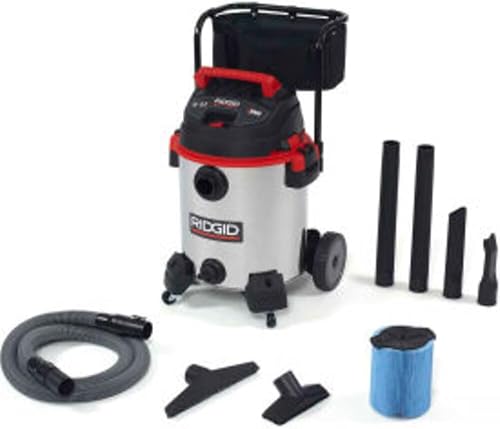 Best for uneven garage floors
Ridgid 1610RV 16-Gallon Wet/Dry Shop Vac

Shop vac vs Ridgid: which fits your garage routine?
RIDGID fits a moving cleanup route; Shop-Vac fits a regular cleanup station. Start with that distinction, then check whether either full-size canister suits your space.
A garage used for several projects may need a vacuum near the workbench one day and beside the door the next. RIDGID's rolling arrangement gives that buyer a clear reason to choose it.
Shop-Vac makes sense when most debris collects around the same bench or parking bay. Its storage features help when you need to gather the equipment before bringing a vehicle back inside.
Both models have 16-gallon tanks, 12-amp ratings and 6.5 peak HP motors. Those shared figures don't create a suction winner, so don't use them to break the tie.
Peak horsepower isn't a substitute for airflow and sealed suction figures measured on the same basis. For a plain explanation of airflow, read what CFM means on a shop vac.
Shop-Vac vs RIDGID hose reach
Hose length is effectively a tie: RIDGID provides 8 feet, while Shop-Vac provides 2.4 meters, about 7.9 feet. The small difference won't change where most people can clean.
Measure the route the hose must follow, rather than a straight line across the floor. A bench corner, open car door or stored bicycle can use up reach before the nozzle arrives at the debris.
Leave enough slack to move the nozzle without dragging the canister into your work. Pulling harder on a stretched hose is a poor substitute for repositioning the vacuum.
For vehicle interiors, park the canister where it won't press against paint or block the door. Our guide to using a shop vac to detail a car explains how to plan that cleanup.
Who should buy the RIDGID 1610RV?
Buy the RIDGID if moving the vacuum is a regular part of the job. Its cart, push handle and large rear wheels are the strongest reasons to choose it over this Shop-Vac.
RIDGID says that arrangement helps the vacuum travel over rough terrain, thresholds and stairs. For a garage with a raised doorway or an uneven route between work areas, those features address a daily inconvenience.
Use the handle to guide the canister and keep the route clear of loose cords and offcuts. Pause at a step or threshold so the hose doesn't snag while the vacuum changes direction.
The stainless steel tank and drain also suit a buyer who expects larger cleanup jobs, including occasional liquid pickup. A drain gives you an emptying option that doesn't depend on tipping the whole tank.
Who should skip the RIDGID?
Skip it if you mainly clean small spills, carry equipment upstairs or have little room beside a parked car. A cart helps with rolling, but it doesn't make a large canister a compact carry-around tool.
The RIDGID measures 19.8 inches long by 19.8 inches wide by 28.5 inches high. Measure the parking spot and doorway clearance, then allow room to turn and reach the tank.
Don't buy it mainly for a hose advantage. The two supplied hoses offer nearly the same reach, so the cart needs to solve a real problem in your workspace.
Who should buy the Shop-Vac 8252605?
Buy the Shop-Vac if you want a large cleanup tank with an orderly pack-away routine. Onboard cord and accessory storage suit a garage that switches between workshop use and vehicle parking.
Its 12-foot power cord makes outlet placement worth checking before you choose it. Put the vacuum where the cord can reach without crossing your main walking route, then check that the hose reaches the work.
The canister has 4 wheels, so it can move between nearby cleanup areas. It suits dirt and sawdust pickup around a workbench, floor or vehicle without needing a permanent workstation.
Shop-Vac calls its motor system SVX2 and claims longer motor life than its standard motor. That comparison is within Shop-Vac's range, so it doesn't establish a lifespan advantage over the RIDGID.
Who should skip the Shop-Vac?
Skip it if your main buying reason is moving across rough ground or repeated raised thresholds. The RIDGID has the more useful set of features for that route.
Also skip this size if most jobs involve crumbs beside a seat or a small patch of debris. A large tank takes storage room even when you rarely use its capacity.
Check accessory fit before reusing hoses, nozzles or adapters from an older vacuum. A familiar brand name doesn't establish that every connection will fit your exact model.
Is a 16-gallon tank the right size for your work?
Choose this capacity for bulky debris or larger cleanup jobs, provided you have room to store and empty it. Occasional spot cleanup rarely needs this much tank space.
A woodworking hobbyist may collect a bulky pile of shavings that fills a small tank quickly. Someone cleaning a car mat may finish long before the extra capacity becomes useful.
Liquids create a different limit: weight. Emptying more often is usually easier than trying to move a tank holding a large volume of water.
Plan the disposal route before starting, especially if it crosses steps or a raised doorway. Rated tank capacity isn't a target you need to reach before emptying.
For a dry cleanup, think about the debris itself. Long scraps can bridge across a hose opening, and a full container of fine dust can be messy to empty without the right collection setup.
Our guide to shop vac sizes and how they work explains capacity and physical size in more detail. The broader shop vac buyer's guide helps if you're still choosing between a large canister and a smaller machine.
How should you set up either vacuum before use?
Match the filter setup to the material, then check the hose path and tank closure. A few checks before switching on can prevent clogs, leaks and avoidable cleanup afterward.
Start with the vacuum unplugged. Confirm that the tank is empty enough for the job, the filter is seated as instructed and the lid is secured.
Both models use cartridge filters, but wet and dry jobs can require different arrangements. Follow the exact manual rather than assuming a dry filter should stay in place for water pickup.
Push the hose connections fully into place and inspect the nozzle opening for trapped scraps. If you add a bag or another accessory, confirm that it's compatible with the model and permitted for the material.
Place the canister on a stable surface with the cord away from wheels and sharp edges. If an extension cord is necessary, follow the manual's requirements for cord size and length.
Begin with an open hose path and a nozzle suited to the debris. Forcing a large piece through a narrow attachment can create a blockage that takes longer to clear than collecting it separately.
How do you switch safely between water and dry debris?
Empty the tank and follow the manual's filter instructions each time you change jobs. Wet-dry capability requires the right setup for the material you're collecting.
Before picking up water, remove any dry collection bag if the manual requires it and arrange the filter as directed. Keep the plug, outlet and motor head away from pooled water.
Don't vacuum fuel, flammable solvents or hot debris. For an unknown spill, identify the liquid before deciding whether a wet-dry vacuum is appropriate.
Stop when the vacuum's shutoff activates or the manual's fill limit is reached. If suction changes suddenly during liquid pickup, switch off and investigate rather than continuing to run it.
Afterward, unplug the machine and empty the tank into a suitable disposal point. Clean out residue and let the tank, hose and reusable parts dry as instructed before returning to dry debris.
Damp sawdust and dirt can stick inside a hose or tank, making the next cleanup harder. Our guide to whether a shop vac can vacuum water covers the changeover in more detail.
Can either model collect dust from power tools?
Either may fit permitted workshop cleanup, but tool connection and dust control need separate checks. Cleaning sawdust from a floor isn't the same job as capturing fine dust while a tool runs.
Check the tool's dust port, the hose connection and the filtration requirements for the material. An adapter that joins two openings doesn't confirm adequate dust capture.
Neither vacuum should be assumed suitable for hazardous dust based on tank size or motor figures. Materials such as lead-contaminated debris or asbestos require equipment and procedures designed for that hazard.
A separator can collect much of the debris before it reaches the vacuum, reducing how often you empty the main tank. It also adds another container and hose connection that need floor space.
Read about shop vac dust separators before planning that arrangement. Keep access to the separator clear so emptying it doesn't become harder than emptying the vacuum.
For repeated tool use, also consider where the hose will run as you feed material through the tool. Keep it clear of moving parts and don't let it pull across the workpiece.
What care prevents weak pickup and messy storage?
Keep the filter clear, empty the tank before debris crowds the inlet and inspect the hose when pickup drops. These habits matter more than choosing a brand and ignoring routine care.
If suction falls, switch off and unplug the vacuum before checking the nozzle, hose, tank and filter. Clear a blockage before assuming the motor is the problem.
Follow the filter's cleaning instructions. Don't wash a cartridge unless its care directions allow it, and let washable parts dry fully before refitting them.
Inspect the filter for tears and check that it seals correctly. Replace a damaged filter with a compatible part suited to the debris you collect.
After a job, gather the cord without tight bends and remove debris caught in accessories. Store the hose where it won't be crushed beneath other equipment.
Both vacuums also have blower ports, but blowing isn't the best answer for every mess. Collect fine dust rather than scattering it through the garage, and direct any blower use away from people and open doors.
What mistakes should you avoid before buying?
Avoid buying around the badge on the motor while overlooking fit, emptying and reach. These two vacuums are close enough that the wrong size or parking plan can outweigh their feature differences.
Don't choose a large tank simply because it holds more. If lifting, storing or emptying it will discourage regular use, compare smaller options.
Don't assume the supplied equipment covers every job. Confirm the exact nozzle or adapter you need, especially for narrow vehicle spaces or a power-tool connection.
Don't plan to solve all reach problems with extra hose. Longer runs add storage bulk and can reduce airflow, so first consider whether you can move the canister closer.
If capacity is still in question, browse our shop vac picks for other sizes and uses. The best wet-dry vacs guide offers alternatives if neither model fits your routine.
Shop-Vac vs RIDGID: make the final choice
Choose RIDGID when the route is the problem; choose Shop-Vac when packing away is the priority. If either feels too large for your normal mess, step down in size before choosing a brand.
Ridgid 1610RV 16-Gallon Wet/Dry Shop Vac
Choose this model for cleanup that moves between work areas or crosses uneven surfaces. Its 8 score reflects that practical fit, with the drain adding a useful option for liquid disposal.
Shop-Vac 8252605 16-Gallon Wet/Dry Vac
Choose this model for a regular garage station where you want to put the cord and accessories away after each job. Its 7.9 score places it close behind for buyers whose cleanup routine stays mostly in one area.
To settle your shop vac vs Ridgid choice, measure the parking space, trace the hose route and plan where you'll empty the tank. Buy the one that makes those 3 tasks easiest.
For another model comparison, see RIDGID vs Craftsman shop vacs. For wider brand context, read whether Shop-Vac is a good brand.
Frequently asked questions
Is Shop-Vac or RIDGID better for a garage?
RIDGID is the better fit for a garage with thresholds and frequent moves between work areas; Shop-Vac suits a regular cleanup station where onboard cord and accessory storage help keep the floor clear. Choose around your usual route and parking space, rather than picking a brand before considering the room.
Do the Shop-Vac and RIDGID have the same tank size?
Yes, both models have 16-gallon tanks; that capacity suits bulky debris and larger cleanup jobs, but the tank doesn't need to be full before you empty it. For liquids, plan disposal first because a large volume becomes heavy and awkward to move, especially across steps or raised doorways.
Which vac has the longer hose?
RIDGID has an 8-foot hose, while Shop-Vac has a 2.4-meter hose, about 7.9 feet; the difference is too small to drive the choice. Measure the route around a bench or car door, and allow slack so the hose doesn't pull the canister toward your work.
Can both models pick up wet and dry messes?
Yes, both models support wet and dry pickup when configured according to their manuals; check the required filter arrangement before changing jobs, then empty and clean the tank afterward. Wet-dry capability doesn't mean either model can handle fuel, solvents, hot debris or every kind of fine dust.


