5 Best Quiet Shop Vacs (October 2026)
The best quietest shop vacs include the DeWalt DXV06P-QT 6-Gallon StealthSonic Vac for everyday garage cleanup, the DeWalt DXV05P-QT 5-Gallon StealthSonic Vac for small cleanup loads, and the DeWalt DXV10S-QT 10-Gallon StealthSonic Vac for recurring wet cleanup.
On this page (8 sections)
- How do you choose the quietest shop vac for your work?
- Which model fits your cleanup routine?
- How should you compare shop vac noise claims?
- Which tank size and hose fit your debris?
- How should you set up a quiet shop vac?
- What care helps keep cleanup efficient?
- Which buying mistakes should you avoid?
- Which quietest shop vac candidate should you choose?
The DeWalt DXV06P-QT is our top choice for quiet everyday cleanup, with a useful balance of collection space and included tools. If you want the quietest shop vac, start with its stated noise figure, then choose the tank and reach that fit your work.
Three smaller DeWalt picks share the same stated sound level, so there is no clear noise winner among them. The two larger alternatives use percentage reduction claims that cannot be ranked directly against those figures.
Use the complete shop vac buyer’s guide if you're still deciding what type of machine you need. Our broader best shop vac picks cover the category beyond quieter models.
Our picks at a glance
-
1
 Best for everyday garage cleanup
DeWalt DXV06P-QT 6-Gallon StealthSonic Vac
8.5/10 our score
See it on Amazon -
2
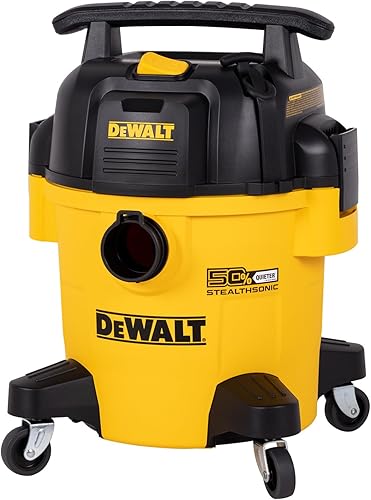 Best for small cleanup loads
DeWalt DXV05P-QT 5-Gallon StealthSonic Vac
8.5/10 our score
See it on Amazon -
3
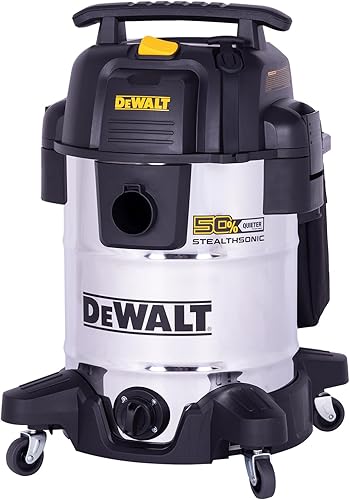 Best for recurring wet cleanup
DeWalt DXV10S-QT 10-Gallon StealthSonic Vac
8.2/10 our score
See it on Amazon
- 4
 Check it
DeWalt DXV16P-QTA 16-Gallon StealthSonic Vac
Best for bulky workshop debris - 5
 Check it
Shop-Vac 5430098 12-Gallon Ultra Quiet Vac
Best for garages with few outlets
How do you choose the quietest shop vac for your work?
Choose a quiet shop vac by sound information first, then cleanup load and working range. A machine that fits your normal job is more useful than a larger one bought only for an impressive motor claim.
BriskErrand compared the noise information, tank sizes, included tools, and reach of these five models. The first two share the highest score, with the extra collection space putting the DXV06P-QT first.
Decide where the vacuum will sit before choosing a tank. Cleaning beside a ground-floor workbench calls for a different machine than carrying one upstairs or moving between a driveway and a storage closet.
Next, separate occasional spills from recurring liquid cleanup. A drain port becomes more useful as the amount of water and frequency of emptying increase.
| Product | Best for | Capacity | Noise information | Cord and hose | Our score |
|---|---|---|---|---|---|
| DeWalt DXV06P-QT 6-Gallon StealthSonic Vac | everyday garage cleanup | 6 gallons | 65 dB | 10 ft cord, 7 ft hose | 8.5 |
| DeWalt DXV05P-QT 5-Gallon StealthSonic Vac | small cleanup loads | 5 gallons | 65 dB | 7 ft hose | 8.5 |
| DeWalt DXV10S-QT 10-Gallon StealthSonic Vac | recurring wet cleanup | 10 gallons | 65 dB | 10 ft cord, 7 ft hose | 8.2 |
| DeWalt DXV16P-QTA 16-Gallon StealthSonic Vac | bulky workshop debris | 16 gallons | DeWalt claims 50% quieter than its current model | 20 ft cord, 7 ft hose | 8.1 |
| Shop-Vac 5430098 12-Gallon Ultra Quiet Vac | garages with few outlets | 12 gallons | Shop-Vac claims up to 60% quieter than standard models | 25 ft cord, 7 ft hose | 7.8 |
What makes a quietest shop vac comparison useful?
A useful comparison separates measured sound figures from relative noise claims. Percentages only become comparable when the reference machine and measurement method are clear.
The sound of debris moving through the hose also matters during use. Choosing a quiet motor cannot remove the clatter of hard pieces entering the tank or the hiss at a narrow nozzle.
Which model fits your cleanup routine?
The DXV06P-QT fits routine mixed cleanup, while the other picks suit smaller loads, repeated wet work, bulky debris, or longer distances from outlets. Choose the advantage you'll use most often.
DeWalt DXV06P-QT 6-Gallon StealthSonic Vac: Best for everyday garage cleanup
- 6-gallon capacity
- 65 dB stated noise level
- Rubberized non-marring casters
- Wet and dry filter kit
The balanced choice for recurring garage and household messes, with floor and detail tools included. Its smaller tank is easier to fit into a routine than a large collection drum.
Pros
- Floor and detail attachments included
- Washable cartridge filter and foam filter included
- Locking hose connection
Cons
- Shorter cord than the larger picks
- Frequent large loads call for more capacity
The DXV06P-QT combines a 6-gallon tank, 10 ft cord, and 7 ft hose. Its stated 65 dB noise level gives buyers a numeric sound reference without committing to a large collection drum.
Its kit includes a washable cartridge filter, foam filter, disposable dust bag, and two extension wands. A floor brush, round brush, utility nozzle, crevice nozzle, and tool adapter cover floors, corners, and smaller cleanup areas.
This is the strongest fit for someone who sweeps up garage debris, cleans around household projects, and occasionally handles a suitable wet mess. The rubberized non-marring casters help when rolling across finished surfaces, provided you keep the wheels free of grit.
At 18.2 lb, it is slightly lighter than the smaller-capacity DeWalt below. That makes it the better starting point if you were choosing the smaller tank mainly to reduce carrying weight.
Skip it if repeated large loads are the problem you're trying to solve. Also check outlet placement, since its shorter cord may require repositioning during cleanup around a vehicle or long bench.
DeWalt DXV05P-QT 5-Gallon StealthSonic Vac: Best for small cleanup loads
- 5-gallon capacity
- 65 dB stated noise level
- 2 extension wands
- Crevice nozzle included
A match for modest amounts of dry debris and small wet messes. Choose it because its collection size fits your work, rather than assuming fewer gallons means less weight.
Pros
- Floor brush and crevice nozzle included
- Washable cartridge filter and foam filter included
- Tool adapter included
Cons
- Smallest tank in this group
- No weight advantage over the 6-gallon pick
The DXV05P-QT suits small, contained cleanup jobs where a larger tank would spend most of its time partly empty. Its 5-gallon capacity makes sense for crumbs, tracked-in grit, and modest amounts of project debris.
It shares the top pick's stated sound level and hose length. The included floor brush, utility nozzle, crevice nozzle, and two wands cover basic floor cleaning and narrow spaces.
A washable cartridge filter, foam filter, dust bag, and tool adapter are also included. These give you options for different tasks, with the manual determining the correct filter arrangement for each material.
Choose it when you're happy to empty after short sessions and don't need room for larger piles. For seats, mats, and footwells, compare nozzle access in our guide to shop vacs for car detailing.
Skip this model if you're expecting a smaller tank to mean an easier lift. It weighs 18.3 lb, so capacity alone gives it no carrying advantage over the top pick.
DeWalt DXV10S-QT 10-Gallon StealthSonic Vac: Best for recurring wet cleanup
- 10-gallon capacity
- 65 dB stated noise level
- Built-in drain port
- Attached accessory storage
The drain port and larger tank suit jobs that would interrupt a smaller vacuum with repeated emptying. Attached storage helps keep the cleanup tools together.
Pros
- Drain port for emptying liquid
- Accessory bag attaches to the vac
- Car nozzle and floor tools included
Cons
- Heavier than both smaller DeWalt picks
- Short cord for a large work area
The DXV10S-QT is the choice for larger recurring messes, especially suitable liquid pickup. Its 10-gallon tank and built-in drain port reduce the need to lift a tank to empty collected water.
The attached accessory bag is another practical benefit. Keeping the right nozzle with the vacuum saves a search through drawers when a spill needs prompt attention.
It shares the top pick's stated noise level, cord length, and hose length. The included car nozzle, brushes, utility nozzle, tool adapter, and wet and dry filter supplies support varied cleanup.
Choose it if smaller machines interrupt your work with repeated emptying and you can usually roll the vacuum to the job. Plan where you'll discharge collected water before starting, since a drain port still needs an appropriate disposal point.
Skip it for frequent stair carrying or brief household touch-ups. At 25.3 lb before collected debris or water, it asks more of you during lifting than either smaller DeWalt.
DeWalt DXV16P-QTA 16-Gallon StealthSonic Vac: Best for bulky workshop debris
- 16-gallon capacity
- 135 CFM airflow
- 20 ft power cord
- 2.5 in crush-resistant hose
The largest tank and wider hose suit substantial workshop cleanup. Choose it for collection volume and reach when those needs outweigh having a numeric sound reference.
Pros
- Largest tank in this group
- Longer cord than the smaller DeWalt picks
- Hose and cord storage wraps
Cons
- No specific decibel figure for comparison
- Nominal tank volume exceeds usable collection space
The DXV16P-QTA suits bulky workshop cleanup that rewards a large tank and wide hose. Its 16-gallon tank is the largest here, paired with a 2.5 in crush-resistant hose and stated 135 CFM airflow.
The 20 ft cord allows more freedom around a work area than the shorter cords on the smaller DeWalt picks. Hose and cord wraps help contain those parts when the vacuum goes back into storage.
DeWalt claims this model is 50% quieter than its current model, without a specific decibel figure for this comparison. Choose it for its collection setup rather than assuming the reduction makes it quieter than every other pick.
Tank capacity describes total tank volume, not the amount you can collect during operation. Leave room for the filter assembly and follow the fill limits for the task.
Skip it if your normal mess is a few handfuls of debris or if a numeric noise reference is essential. Its size is most useful when you have floor space to keep it near the work.
Shop-Vac 5430098 12-Gallon Ultra Quiet Vac: Best for garages with few outlets
- 12-gallon capacity
- 25 ft power cord
- 108 CFM airflow
- 2.5 in hose
The longest cord here makes this a useful option for cleaning around a garage with limited outlets. Its wider hose also suits loose workshop debris.
Pros
- Longest power cord in this group
- Larger tank for extended cleanup
- Wide hose for loose debris
Cons
- No specific decibel figure for comparison
- More weight to carry than the smaller picks
The Shop-Vac 5430098 is the pick for working farther from an outlet. Its 25 ft power cord is the longest here, paired with a 12-gallon tank and 7 ft hose.
That reach is useful when the outlet is near the garage door but the mess is behind a workbench. Trace the actual cord route around parked equipment before deciding how much length you need.
Its 2.5 in hose and stated 108 CFM airflow suit general loose-debris cleanup. Shop-Vac claims operation is up to 60% quieter than standard models, but that percentage doesn't establish a sound ranking against the DeWalt picks.
Choose it when outlet access is the main obstacle and you want more collection space than a smaller household cleanup machine. Keep the cord out of walking routes rather than stretching it across the shortest path.
Skip it if you mainly clean beside an outlet or carry the vacuum often. Its 25.9 lb weight is another reason to plan on rolling it between nearby jobs.
How should you compare shop vac noise claims?
Compare decibel figures only when the measurement conditions match, and treat percentage claims as separate information. A lower number is meaningful only if the distance, operating setup, and measurement method allow a fair comparison.
The three smaller DeWalt models each specify 65 dB. That shared figure gives them a common reference, but it doesn't prove they will sound identical beside your workbench.
Decibels use a logarithmic scale, so a percentage reduction in a brand's noise claim cannot simply be subtracted from a decibel number. Don't choose between these machines by comparing “50%” and “60%” as if they share a starting point.
Room surfaces change the experience, too. A bare garage with concrete floors can reflect sound, while the same vacuum in a less reflective space may seem less sharp.
Think about operating time as well as volume. A nearby nozzle, clear hose, and clean filter help you finish the job without repeatedly covering the same patch.
A quieter machine still needs sensible use around other people. Plan disruptive cleanup for a suitable time, and follow the manual and workplace rules for hearing protection.
Which tank size and hose fit your debris?
Choose collection volume for your normal load and hose width for the material. Buying extra gallons won't solve a hose blockage, while a wide hose won't make a small tank hold more.
Match the tank to one normal cleanup session
Start by picturing the amount you collect after a typical project. Short sessions with loose grit favor a smaller tank; repeated piles of shavings or suitable liquid pickup favor more room.
Avoid sizing the vacuum around a rare mess if that choice makes every other job awkward. A large machine needs storage space even when the tank is empty.
For liquid cleanup, think through the full trip to disposal. You don't have to fill a tank to its limit, and stopping early can be easier than moving a heavy load.
Compare the actual storage opening with the machine's dimensions, including clearance for hoses and tools. Our guide to choosing a shop vac by size explains how tank volume differs from portability.
Match airflow and hose width to the task
A wider hose gives larger loose pieces more room to pass. Narrow tools help reach gaps, but they also create a tighter path that can catch debris.
Remove oversized scraps by hand before vacuuming. Forcing a piece into the nozzle can turn a quick cleanup into a hose-clearing job.
Airflow is useful for comparing how much air a vacuum moves, while suction describes a different part of performance. Our explanation of what CFM means on a shop vac helps separate those terms.
Don't rank these models by peak horsepower alone. Peak HP is a comparison term, not continuous operating output, and it doesn't tell you which nozzle will collect your particular mess most easily.
Separate floor cleanup from tool dust extraction
Cleaning settled debris is different from capturing dust as a tool creates it. Tool extraction needs a compatible connection, suitable filtration, and airflow matched to the tool.
An included tool adapter is a starting point, not proof that every tool will connect or receive enough airflow. For that job, use our guide to shop vacs for dust collection before choosing.
How should you set up a quiet shop vac?
Set up the vacuum with the correct filter, a clear hose, and an open exhaust path before switching it on. Good placement lets you work without dragging the tank or blocking cooling airflow.
Position the tank for the whole job
Place the vacuum on a stable, level surface where it can roll without striking furniture or equipment. Leave slack in the hose so reaching a corner doesn't pull the tank toward you.
Cord reach and nozzle reach serve different purposes. A long cord lets you place the tank farther from an outlet, while the hose controls how far you can clean from that position.
Avoid adding hose length just to move the motor farther away. Longer or restricted hose paths can reduce airflow, so use compatible parts and keep the route as direct as practical.
Never put a running vacuum in a closed cabinet or wrap it in blankets to reduce sound. Keep its vents and exhaust clear, and address a loose attachment or rattling lid directly.
Prepare for dry debris
Fit the dry filter arrangement required for the material, checking that the filter seats firmly. Use a compatible collection bag where the manual permits it, and check it before a long session.
Choose the floor tool for open areas, then switch to the crevice tool for gaps. Trying to clean an entire floor with a narrow nozzle adds passes and running time.
Keep the nozzle close to the debris without forcing it flat against every surface. If it seals tightly and becomes hard to move, adjust the angle or use a more suitable attachment.
Change the setup before collecting water
Unplug the vacuum before changing filters or removing a bag. Follow the model's wet-pickup instructions rather than assuming the dry configuration is suitable.
Keep plugs and connections dry, watch the fill limit, and stop as the manual directs if a liquid shutoff engages. Don't use these vacuums to collect flammable liquids, hot ash, or unknown hazardous material.
Empty and clean the tank afterward, then let the required parts dry before returning to dry cleanup. Our guide to how to use a shop vac covers the operating sequence in more detail.
What care helps keep cleanup efficient?
Keep filters, hoses, and seals clear and correctly fitted so the vacuum doesn't need extra passes. Maintenance is especially useful when pickup weakens or the sound changes during a familiar job.
Check the air path before blaming the motor
Switch off and unplug the machine before checking for a clog. Inspect the nozzle, hose bends, inlet, collection bag, and filter in that order.
A full bag or loaded filter restricts airflow even when the tank looks mostly empty. Clear the restriction instead of pushing harder on the nozzle or continuing to run the machine.
If the sound changes suddenly, stop and investigate. A blocked tool, loose connection, or full wet tank calls for attention rather than more running time.
Clean filters according to their instructions
Wash only filters identified as washable, using the method the manual allows. Let them dry fully before dry pickup, and replace damaged filters with compatible parts.
Don't knock fine dust out of a filter in the space you just cleaned. Handle collected dust and bags carefully, using the precautions appropriate to the material.
Check lid latches and hose connections when reassembling the vacuum. A poor seal can waste airflow and leave you spending longer on the same mess.
Store tools so the next setup is easy
Empty wet debris promptly and avoid storing a closed, damp tank. Check the hose for trapped material before wrapping it away.
Keep the attachments you use most with the vacuum, and inspect casters for embedded grit before rolling onto finished floors. Our guide to useful shop vac accessories can help you choose additional tools by task.
Which buying mistakes should you avoid?
Avoid choosing by one headline claim, especially tank size, peak HP, or a percentage noise reduction. Each describes only part of the machine you'll use.
- Assuming smaller means lighter: compare carrying weight separately from tank capacity.
- Buying capacity without planning disposal: consider how you'll move and empty a loaded tank.
- Confusing cord length with hose reach: map the outlet route and the cleaning area separately.
- Assuming every fine dust is suitable: check filtration and material requirements before collecting it.
- Expecting silence: hard debris, nozzle airflow, and room reflections still contribute sound.
Also consider how often you change tasks. Switching between water and dry dust requires preparation, so choose a machine you can open, empty, and reconfigure comfortably.
A quiet vacuum that is awkward to store or move can become a poor everyday fit. Give those routine steps as much attention as the motor's sound information.
Which quietest shop vac candidate should you choose?
Choose the DXV06P-QT for ordinary garage and household cleanup when you want a balanced starting point. Pick the DXV05P-QT when its smaller collection load matches your routine and you don't need a weight saving.
Move to the DXV10S-QT when repeated emptying, especially after suitable wet cleanup, is the main interruption. Choose the DXV16P-QTA when bulky debris and collection volume drive the decision.
The Shop-Vac 5430098 makes the most sense when outlet placement limits where you can work. Its longer cord is a practical reason to choose it, independent of its noise reduction claim.
The quietest shop vac for your needs should also be easy to place, empty, and keep ready. If your requirements extend beyond quieter operation, continue to our best shop vac picks.
Our top 3 picks at a glance
-
1
Best for everyday garage cleanup
DeWalt DXV06P-QT 6-Gallon StealthSonic Vac
8.5/10 our score
See it on Amazon -
2
Best for small cleanup loads
DeWalt DXV05P-QT 5-Gallon StealthSonic Vac
8.5/10 our score
See it on Amazon -
3
Best for recurring wet cleanup
DeWalt DXV10S-QT 10-Gallon StealthSonic Vac
8.2/10 our score
See it on Amazon
Frequently asked questions
What is the quietest shop vac?
The DeWalt DXV06P-QT is our top choice for quiet everyday cleanup, but these specifications don't establish an absolute sound-level winner; three DeWalt models share a stated 65 dB figure, while the other picks use percentage claims with different baselines. Choose among them by cleanup load, reach, and tools.
Is 65 dB quiet for a shop vac?
A stated 65 dB figure gives you a useful sound reference, provided you compare measurements made under similar conditions; distance, room surfaces, and the task affect what you hear. It doesn't promise silent cleanup or settle hearing-protection needs; follow the manufacturer's instructions and applicable workplace requirements.
Does a quieter shop vac have less suction?
A quieter shop vac does not necessarily have less suction; motor sound is separate from the airflow through the hose, and pickup also depends on nozzle fit, restrictions, and filter condition. Compare the available airflow figures alongside your intended task, using our guide to shop vac CFM for more detail.
Which quiet shop vac size should I choose?
Choose a smaller tank for short cleanup sessions and a larger one when repeated emptying interrupts your work; check storage dimensions, carrying weight, and the route to your disposal point separately. A larger tank can become difficult to move when loaded, as our shop vac size guide explains.
Can a quiet shop vac pick up water?
Yes, all five picks are wet-dry vacuums, but each needs the correct setup before collecting water; follow its manual for filters, bags, fill limits, and shutoff instructions, and keep electrical connections dry. Our guide to using a shop vac for water explains the main preparation steps.


